The execution chamber is supposed to project clinical precision. State officials wrap the process in sterile language, quiet rooms, and medicalized protocols. But reality looks entirely different when the drugs fail to work.
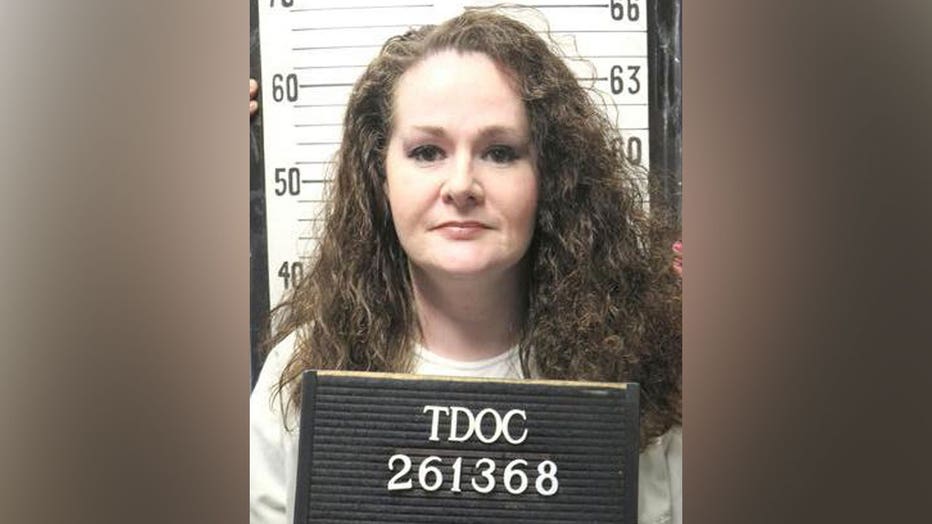
The botched lethal injection attempt on Christa Pike in Tennessee didn't just shock legal observers; it pulled back the curtain on a systemic crisis hiding inside American capital punishment. When two doses of pentobarbital failed to kill her on September 30, witnesses watched her continue to breathe, lift her body off the gurney, and report that her arm felt like it was about to burst open. Weeks later, after regaining consciousness following a hospital stint, she stands at the center of a furious national debate over how the United States carries out state-sanctioned death.
Governor Bill Lee announced a pause on executions and promised an outside review. Yet legal experts and human rights advocates note that Pike’s ordeal isn't an isolated anomaly. It's a symptom of a deeply flawed mechanism that has plagued state prisons for decades.
The Illusion of Clinical Cleanliness
States adopted lethal injection in the late twentieth century to replace older, visibly gruesome methods like the electric chair, gas chambers, and hanging. The goal wasn't necessarily to make executions humane, but to make them look palatable to the public and witnesses. For another angle on this event, refer to the recent coverage from Associated Press.
Electrocutions occasionally resulted in catching fire or leaving distinct odors of burning flesh. Lethal injection promised a quiet, peaceful departure.
That promise was an illusion. Data compiled by researchers and organizations like the Death Penalty Information Center show that lethal injections are actually botched at more than twice the rate of any other historical execution method.
Why does a method designed to mimic a medical procedure fail so consistently? The answer lies in a fundamental contradiction. Executions require medical precision, but actual medical professionals are barred by professional ethics boards from participating. The Hippocratic Oath explicitly forbids doctors from doing harm.
As a result, state correction departments rely on prison staff or anonymous individuals with questionable qualifications to handle delicate intravenous lines and powerful chemicals.
When Veins Collapse and Drugs Run Dry
Carrying out an IV execution requires finding a stable vein and administering the exact dosage into the bloodstream. On death row, the population is aging rapidly. Inmates spend decades waiting for their execution dates, developing chronic health conditions, compromised cardiovascular systems, and scarred veins.
In Pike's case, her legal team had previously pointed out that she had small veins and a complex blood condition. Following the botched attempt, her arms appeared badly burned and swollen. Experts point to classic signs of a blown vein or a missed injection site, where the chemicals leaked into surrounding tissue instead of reaching the heart.
This failure mode repeats across the country with grim regularity. In February 2024, Idaho authorities called off the execution of Thomas Creech after an execution team spent hours failing to establish an IV line in his arms, legs, and feet. Months later, Tennessee suspended Tony Carruthers' execution after workers struggled for over ninety minutes to set a backup line.
Compounding the problem is the pharmaceutical industry. Major drug manufacturers refuse to sell their products for use in executions. To bypass this barrier, states turn to compounding pharmacies. These facilities create custom-mixed drugs under far less regulatory oversight than mass-produced pharmaceutical drugs, leading to variable potency, unexpected side effects, or expired compounds.
What Happens When the System Breaks Down
When an IV line fails or drugs are improperly mixed, the prisoner experiences prolonged physical trauma. Witnesses to botched executions frequently describe agonizing delays, audible distress, and visible signs of pain that contradict the state's narrative of a painless passing.
When Pike stated that her arm felt like it was splitting open, she wasn't describing a peaceful medical sedation. She was experiencing the burning agony of caustic chemicals failing to enter her bloodstream correctly.
These episodes force a hard look at the integrity of capital punishment. If a state cannot carry out an execution without turning it into a medical disaster, the entire premise falls apart. Pausing executions for a third-party review addresses only the surface symptoms of a broken process.
The underlying reality remains unchanged. Lethal injection was built to comfort the public, not to guarantee a humane death. Until states confront the fundamental impossibility of performing complex medical procedures behind prison walls without medical professionals, cases like Christa Pike's will keep happening.