Old wounds in Northern Ireland don't heal; they just wait. When the Parades Commission overturned a nearly 30-year ban allowing an Orange Order march down the Garvaghy Road, it didn't just rattle Portadown. It exposed how fragile the peace really is when historic flashpoints get dragged back into the light.
Talks between Northern Ireland Secretary Chris Bryant and local factions have hit a brick wall. Nationalist leaders made it clear that mediation is entirely off the table, opting instead for a fierce legal fight in the High Court. If you're wondering why a single parade route can paralyze regional politics, you have to look at the mandate of communities living right on the front line. Breandán Mac Cionnaith, leader of the Garvaghy Road Residents' Coalition, put it bluntly after his talks: his community wants no parade, period. Nearly 4,000 residents share that mandate, and they aren't backing down.
Meanwhile, members of the Portadown Orange Order spent days camped out near Drumcree church, vowing to hold their ground until police let them complete the historic route. District master Nigel Dawson called his talks constructive, but the legal reality tells a different story.
The core of the current legal challenge focuses on how the Parades Commission reached its decision. During a special High Court sitting, barrister Denise Kiley KC argued that the commission materially misdirected itself. The paperwork used to greenlight the march looked backward at historical risk assessments rather than forecasting future public disorder. When you rely on outdated templates instead of rigorous future risk analysis, you invite chaos.
The fallout stretches far beyond Portadown. Sinn Féin leader Mary Lou McDonald and First Minister Michelle O'Neill traveled to Dublin to brief Irish government leaders including Micheál Martin and Simon Harris. Martin didn't mince words, calling the decision to allow the march incomprehensible and wrong. McDonald noted that local communities were completely gobsmacked by a ruling that threatens to drag society back to bleak days.
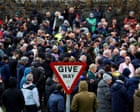
Unionists, however, fired back with heavy criticism after O'Neill and senior colleagues joined a large crowd blockading the nationalist Garvaghy Road to physically stop the parade from passing. Under local parading laws, public protests require formal notification to the adjudication body, and the ongoing gathering at the head of the road hasn't been officially notified. Yet police have avoided breaking up the crowd, knowing full well that any aggressive intervention could spark immediate violence.
Former Taoiseach Bertie Ahern chimed in with a stark warning about sliding back into a tribal past. The 1998 peace deal cost too much blood and political capital to watch it unravel over a stretch of asphalt in County Armagh.
As the High Court prepares to hear the judicial review, the stalemate continues. Neither side is willing to blink, and trusted mediation channels are currently dead. Keep an eye on the court's interpretation of future risk assessments, because that ruling will dictate whether this standoff remains an isolated flashpoint or spirals into a wider constitutional crisis.