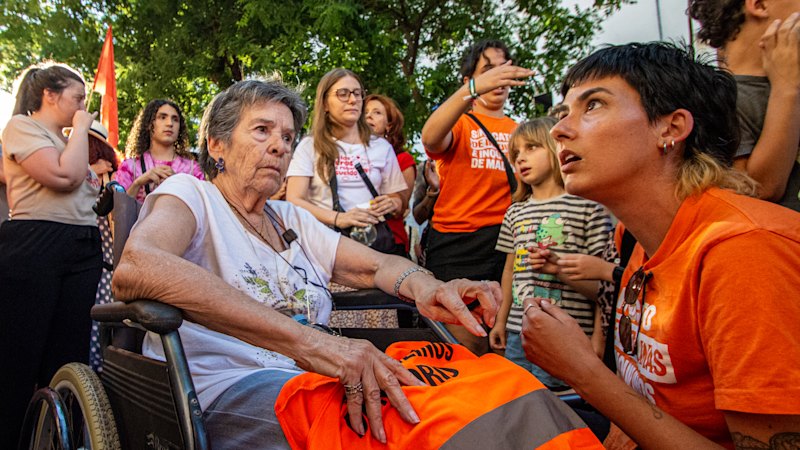
When riot police used a battering ram to smash down the apartment door of an 87-year-old woman in Madrid, they didn't just enforce an eviction notice. They lit a match under a powder keg that had been building for over a decade. Maricarmen Abascal had lived in her home for seventy years. Carrying her out on a stretcher while protesters chanted outside turned a routine legal eviction into a national symbol of Spain's broken housing market.
Spain erupted. And honestly, nobody should be surprised.
The Boiling Point of Spain's Housing Crisis
Let's look at the numbers. Since 2015, average house prices in Spain have shot up by 80 percent, while rental costs have surged by an incredible 87 percent. Meanwhile, what happened to salaries? They crept up by just 28 percent, barely keeping pace with everyday inflation.
When you combine stagnant wages with short-term holiday rentals like Airbnb eating up housing stock in cities like Madrid, Barcelona, and Seville, you get an impossible arithmetic for normal workers. Over 60 evictions take place every single day across the country. Almost three-quarters of those now involve everyday tenants rather than mortgage defaults.
Abascal’s specific situation was a ticking time bomb. Her father signed her original rental contract seven decades ago during the Franco dictatorship, an era when regulations kept rents artificially low. Her family held onto the tenancy under legacy rules, but Spanish law blocks those contracts from being transferred twice. When real estate firm Urbagestión bought the building in 2018, they demanded she pay more than triple her old rent of €500 a month. She couldn't.
Why the Public Refused to Look Away
Thousands of angry citizens didn't just grumble on social media. They took over Puerta del Sol in central Madrid, setting up protest camps and demanding an end to predatory corporate buyouts.
Public housing accounts for a pathetic 1.5 percent of Spain's total housing stock. Compare that to the Netherlands at 34 percent or the United Kingdom at 16.4 percent, and the structural failure becomes crystal clear. With immigration pushing the population higher and the Bank of Spain estimating a housing deficit of 750,000 units, young people are stuck. Students like 23-year-old Luis Santos are open about their reality: they can't afford to leave their parents' homes.
The political fallout has been messy. Prime Minister Pedro Sánchez's left-wing government rushed to announce emergency reform packages, including anti-eviction rules and rent contract rollovers. But the opposition argues it's too little, too late, accusing the ruling party of exploiting the public anger to distract from scandals and migration pressures.
What Actually Changed
Did the protests work? In the case of Maricarmen Abascal, yes. Facing intense public backlash and national scrutiny, Urbagestión backed down and allowed her to return to her apartment at her original rent.
Yet, for millions of other Spaniards facing skyrocketing rents and vulture funds buying up entire city blocks, the structural crisis remains entirely unsolved. Tent cities remain, political battles in Congress continue, and the cost of living keeps climbing. If governments refuse to build actual public housing or control short-term rentals, Maricarmen won't be the last elderly tenant dragged out by a battering ram.