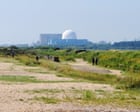
Dogma rarely survives contact with reality. For decades, environmental movements treated nuclear power like public enemy number one, ranking fission right alongside fossil fuels on the existential threat index. That ideological wall finally crumbled at the Green Party conference in England and Wales, where members voted to drop their longstanding opposition to atomic energy.
It is a massive shift. The party didn't suddenly fall in love with radioactive waste or uranium mining. Instead, a bruising collision with the realities of the climate emergency forced a pragmatic reset. When you are staring down a narrowing window to decarbonize global grids, ideological purity becomes a luxury nobody can afford.
The Anatomy of a Pragmatic Pivot
For years, the official line from green politicians was straightforward. Wind, solar, and storage were the holy trinity of clean energy. Nuclear, by contrast, was dismissed as a slow, astronomically expensive distraction. Figures like Carla Denyer once labeled nuclear projects too sluggish to help in a climate crisis, while other senior voices compared pouring money into reactors to propping up obsolete technology.
So what changed? The physics of electrical grids haven't changed, but the desperation to secure dependable baseload power has intensified. Renewables are cheap and fast to build, yet they depend entirely on the weather. When the wind stops blowing and the sun sets, modern grids need reliable backup that doesn't burn coal or gas.
Proponents of the policy change, like the internal group Greens for Nuclear, argued that the climate emergency requires a throw-the-kitchen-sink approach. Under the newly adopted framework, the party ditches blanket opposition. Elected representatives are now free to assess nuclear projects on a case-by-case basis, deciding whether extending plant lifespans or backing new developments makes mathematical sense.
Why the Resistance Persists
Not everyone is popping champagne. Critics within and outside the party view the vote as a betrayal of core environmental principles. Prominent energy experts have called the policy shift irrational, arguing that scarce public and private capital should go directly into renewable expansion and battery storage rather than complex nuclear megaprojects.
The historical roots of anti-nuclear sentiment run deep. Early environmental activism grew hand in hand with anti-weapon campaigns. Disentangling the peaceful generation of electricity from the terrifying legacy of atomic warfare has always been politically fraught.
Even within the party leadership, tensions remain visible. While Denyer adopted a nuanced stance—noting that keeping existing plants running avoids the heavy carbon footprint of new construction—other prominent voices maintain deep skepticism about the spiraling costs and construction delays plaguing modern reactor builds like Sizewell C.
What This Means for Future Energy Debates
This policy evolution signals a broader cultural shift across the political spectrum. The old binaries are breaking down. You no longer have to fit neatly into a rigid ideological box where you either love every form of high-tech energy or reject industrial infrastructure entirely.
When political parties traditionally defined by strict ecological orthodoxy start evaluating nuclear power on its individual merits, the debate moves from theology to engineering. It becomes a cold calculation of carbon payback periods, grid stability, and financial risk.
If you are tracking where energy policy is heading, watch how local representatives use this new flexibility. The real test will happen when individual planning applications land on desks, forcing politicians to weigh local environmental impact against national decarbonization targets. Drop the dogmatic assumptions, look at the engineering data, and judge each infrastructure project on what it actually delivers for the grid.