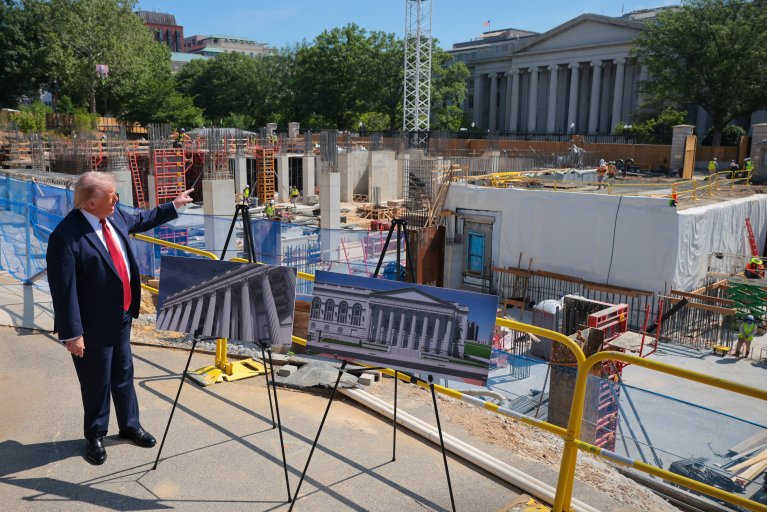
The U.S. military is speeding up its long-range strike capabilities. The U.S. Air Force and Northrop Grumman just broke ground on a massive expansion at Air Force Plant 42 in Palmdale, California, adding over one million square feet of new manufacturing space dedicated to the B-21 Raider stealth bomber.
If you think this is just another routine construction project, you aren't paying attention. This expansion represents a sharp pivot toward high-volume defense manufacturing for next-generation aircraft.
The Reality Behind the Palmdale Expansion
For decades, military aviation programs moved at a glacial pace. Budgets dragged, bureaucratic hurdles stalled progress, and production lines stayed lean. The B-21 Raider is breaking that mold.
The ground breaking ceremony follows an agreement struck earlier this year between the Department of the Air Force and Northrop Grumman to boost annual B-21 production capacity by twenty-five percent. Behind this push is serious financial backing. The Air Force is pumping $4.5 billion into the faster schedule using fiscal 2025 reconciliation funds, while Northrop Grumman is committing billions more of its own capital.
You don't throw billions of dollars at physical real estate unless you plan on building a lot of aircraft, very quickly.
Where the Money and Manufacturing Go
Plant 42 in Palmdale carries serious historical weight. It's the same historic complex where Northrop built the iconic B-2 Spirit decades ago. Now, it's transforming into a high-tech hub for the Air Force's future fleet.
The program isn't isolated to California either. Northrop opened a new manufacturing facility called East Gate 3 in Layton, Utah, to handle specialized components. Overall, the B-21 supply chain relies on more than 400 suppliers scattered across at least forty states.
Building a stealth bomber of this caliber requires extreme precision. Northrop has invested heavily in digital engineering and advanced manufacturing tools to keep costs manageable and timelines tight. Low-rate initial production currently covers twenty-one aircraft across five lots, but the Air Force's baseline requirement sits at a minimum of one hundred Raiders.
What This Means for Future Air Defense
The B-21 Raider is designed to do what older aircraft cannot. Modern air defenses from near-peer adversaries are getting smarter, faster, and harder to evade. Traditional bombers would get shredded in contested airspace.
The Raider uses advanced stealth, next-generation networking, and open-system architecture to penetrate heavy defenses and deliver conventional or nuclear payloads. It will eventually replace aging fleets of B-1B Lancers and B-2 Spirits, serving as the backbone of America's strategic deterrence.
The Air Force even designed the bomber with the flexibility to fly both crewed and uncrewed missions, giving commanders maximum tactical options in a conflict.
As construction at Plant 42 moves forward, keep a close eye on delivery timelines and supplier output. The true test of this new assembly line won't be how fast they pour concrete, but how quickly those stealth bombers roll out of the hangar and into operational squadrons.