Paper promises crumble when billions in export revenue knock on the door. New South Wales just proved it again.
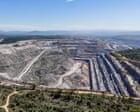
The state's Independent Planning Commission recently gave the green light to the Hunter Valley Operations Continuation Project near Singleton. It stands as the largest coalmine extension in New South Wales planning history. Mining operations will stretch out until 2045, pumping an estimated 809 million tonnes of carbon dioxide-equivalent into the atmosphere over its lifetime.
Climate scientists, advocacy groups, and even the state's own independent Net Zero Commission issued stark warnings. They pointed to models showing that burning this fuel overseas will trigger severe real-world consequences, from catastrophic coral bleaching on the Great Barrier Reef to lethal heatwaves across Europe. Yet, the planning authorities decided the short-term regional economic injection and ongoing tax royalties outweighed the global environmental toll. Critics wasted no time calling it an infamous betrayal.
The Scale of the Hunter Valley Decision
Let us look at the raw numbers. Jointly owned by Glencore and Yancoal, the HVO project anchors a massive slice of the Hunter region's economy. Proponents point to 1,500 jobs, reliable local business support, and decades of established infrastructure near Singleton. For workers and regional suppliers, the decision offers certainty in an otherwise shifting economic climate.
On the flip side, the environmental ledger tells a brutal story. Roughly 794 million tonnes of emissions will happen when the coal gets burned abroad, with the vast majority coming from foreign power plants. While the planning commission slapped a condition on the project requiring exports to go only to countries with climate policies aligned with the Paris Agreement, environmentalists remain deeply skeptical. They argue that parsing emissions by geography makes no difference to the atmosphere holding the heat.
Why the Planning System Collapsed Under Pressure
You might wonder how a state with modern climate targets and an independent planning framework lets a project of this magnitude slide through. The truth is that economic gravity often overrules long-term planning theory. When local communities depend on extraction for survival, state planners face a brutal political dilemma. Say no, and you risk an immediate regional recession and fierce union backlash. Say yes, and you shoulder the wrath of environmental groups and future generations.
The Independent Planning Commission chose immediate stability. They argued that an orderly, managed continuation of an existing asset beats abrupt shocks. But that rationale infuriates watchdogs who expected the planning system to hold the line against massive new fossil fuel expansions. Groups like the Lock the Gate Alliance noted that the state had all the right laws on paper to stop it, making the approval sting even worse.
What Happens Next
The fight isn't entirely over just yet. The project still needs federal environmental approval before the end of the year, setting up another major political showdown. Meanwhile, legal challenges from climate activists loom large as a distinct possibility. Mining representatives are already pushing the state government to shield future approvals from ideological court challenges.
If you live in New South Wales or follow climate policy, this decision marks a definitive turning point. It shows that even in regions aiming for net zero, the pull of legacy coal remains extraordinarily difficult to break. Expect federal regulators to face intense pressure as the final bureaucratic hurdles approach.