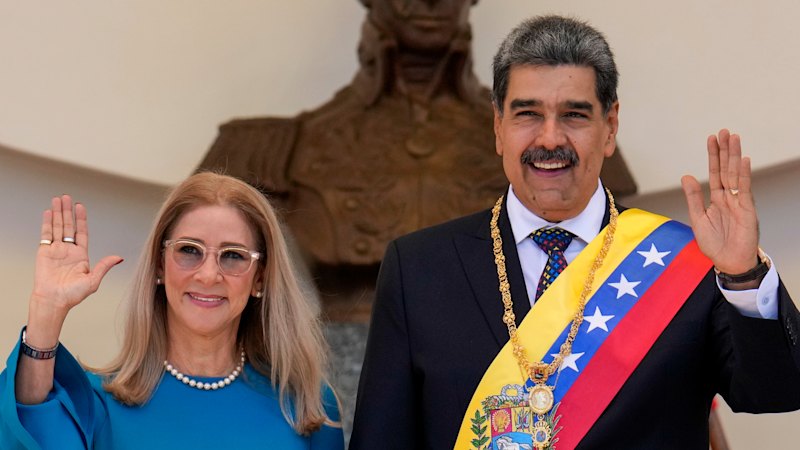
US federal prosecutors didn't just add a few lines to an existing drug case when they slapped Nicolás Maduro and his wife, Cilia Flores, with a brand-new torture conspiracy indictment. They tore open the lid on an institutionalized machinery of state terror.
If you thought the ousted Venezuelan leader's legal battles were purely about cocaine trafficking and cartel alliances, think again. The revised federal indictment filed in New York pulls zero punches, detailing calculated acts of physical violence, psychological torture, and systemic abuse directed straight from the top of the Venezuelan government.
Inside the Machinery of State Repression
For years, human rights organizations and victims' advocates shouted into a void. They documented arbitrary arrests, enforced disappearances, and systematic brutality inside facilities controlled by Venezuela’s DGCIM military intelligence agency and SEBIN secret police.
Now, those accusations have official federal weight behind them.
The revised court document alleges that Maduro didn't just turn a blind eye to human rights abuses—he actively greenlit them. Prosecutors state that Maduro reviewed torture methods, kept tabs on specific high-profile prisoners, watched video footage of forced confessions, and even deployed direct threats against a prisoner’s child as psychological leverage.
Cilia Flores, once hailed as the "First Combatant" and a powerful political operator behind the presidential throne, faces direct allegations of helping build and manage this apparatus of state-sanctioned fear.
The Brutal Reality for Victims
The indictment reads like a dark thriller, but the human toll is entirely real and agonizingly documented. Court filings detail horrific accounts involving US citizens and local dissidents alike.
Victims faced electric shocks, severe beatings, waterboarding, prolonged sleep deprivation, and confinement in notorious cramped cells like "El Tigrito." One American citizen endured eight months of imprisonment that included being beaten, electrocuted, and forced to eat his own vomit. Another suffered permanent eye damage after being hooded, handcuffed, and systematically beaten every thirty minutes for two straight days.
These aren't rogue acts by low-level prison guards. The federal case argues they were core features of a calculated government strategy designed to crush political opposition through sheer terror.
The Defense Strategy and Legal Hurdles
Maduro and Flores aren't going down quietly. Detained in New York since their dramatic midnight capture by American forces in Caracas last January, their defense teams have deployed predictable, yet legally complex, arguments.
Their lawyers are pushing for a complete dismissal of the charges, claiming sovereign immunity as the head of state and first lady of a foreign country. They’ve also labeled Maduro's capture an illegal kidnapping and framed him as a prisoner of war.
Meanwhile, Flores's legal team has fought hard for her release to house arrest, citing severe health deterioration behind bars. Court filings reveal she has lost 25 pounds at the Metropolitan Detention Centre in Brooklyn, suffered a potential mild heart attack, and sustained permanent scarring during the chaotic military raid that brought her to the US.
Prosecutors have pushed back aggressively against any release, pointing to her extreme flight risk and the gravity of the accusations.
A Precedent for Accountability
The addition of these torture charges changes the geopolitical stakes entirely. While drug trafficking charges can often be dismissed abroad as political posturing over narcotics policies, systematic human rights atrocities and torture carry a universal moral weight.
For survivors like former US Marine corporal Matthew Heath—who won a massive default judgment against Venezuelan officials earlier this year after enduring horrific detention—seeing a dictator face a federal judge is historic. It signals to authoritarian regimes worldwide that immunity has an expiration date, and that the long arm of international law can reach inside presidential palaces when impunity finally cracks.