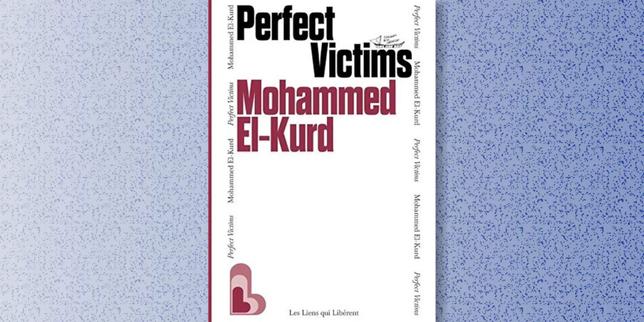
You are only allowed your humanity if you play by their rules. That is the core premise behind the trap that writer and organizer Mohammed El-Kurd dissects in his work. For decades, international media and Western political establishments have conditioned the public to look at the Palestinian struggle through a very narrow, sterile lens. If you are angry, unpolished, or defiant, you lose your right to sympathy. If you fit the mold of a helpless child, a quiet woman, or a perpetually forgiving saint, you might just get a fleeting headline.
This transactional empathy isn't an accident. It is a calculated mechanism of control.
The Impossible Standard of Respectability
Think about how mainstream news covers humanitarian crises. The victims are rarely presented as whole people with complex political opinions, anger, and agency. Instead, they are reduced to passive props. They must be innocent enough, polite enough, and quiet enough to suit the moral palette of a distant, comfortable audience.
El-Kurd calls out this entire ecosystem in Perfect Victims and the Politics of Appeal. The entire framework rests on a humiliating audition. You have to prove you are worthy of basic human rights by demonstrating that you don't pose a threat to the comfort of the status quo.
If you fight back, you are labeled a terrorist. If you express rage over a bombed home or a lost sibling, you are called radical or unhinged. The system demands that you perform your own grief with a quiet, dignified melancholy that makes your oppressor look good. It is a cruel psychological contract. You get solidarity only on the condition that you remain utterly harmless.
Refusing the Politics of Appeal
The trap of the perfect victim relies on what scholars call the "even if" game. You hear it constantly in political debates. "Even if there were weapons hidden under a hospital, it shouldn't be bombed." "Even if fighters hide among civilians, they still have the right to exist."
These statements sound progressive on the surface, but they concede too much ground. They accept the premise that a Palestinian's humanity is conditional. They imply that if the accusations were true, the brutality might somehow be justified.
El-Kurd rejects this entirely. He points out that playing defense and trying to clear moral hurdles set by a colonial power is a dead end. There is nothing a colonized population can do that will ever satisfy an empire committed to erasing them. When you constantly try to prove you are a good victim, you shift the spotlight away from the actual violence of the colonizer and onto the behavior of the people being crushed. You end up policing your own community's tone, anger, and methods of resistance just to keep liberal critics happy.
Why This Dynamic Spreads Far Beyond Palestine
This pattern doesn't just govern how the West looks at the Middle East. It shows up everywhere systemic power imbalance exists. Look at how protest movements are treated globally. Whenever marginalized groups organize against police brutality, economic exploitation, or racial injustice, the media playbook is always the same.
They ignore the root causes of the uprising. Instead, they obsess over a broken window, a raised voice, or a sharp tweet. They demand that protesters be exceptionally peaceful, perfectly polite, and entirely palatable. If a single person steps out of line, the entire movement gets discredited.
The goal is always tone policing. If you can make the oppressed spend all their energy arguing about optics and respectability, they will never dismantle the systems keeping them down. It forces victims to waste precious time proving they have clean hands while the state continues to destroy their homes, their livelihoods, and their futures.
Breaking Out of the Sympathy Trap
Stepping out of this trap requires an uncomfortable shift in mindset. It means letting go of the desperate need for external validation from institutions that benefit from your subjugation.
Anger is not a failure of character. It is a rational, predictable response to sustained cruelty. Expecting people to experience apartheid, displacement, and military occupation while maintaining a cheerful, non-threatening disposition is a form of gaslighting on a mass scale.
True solidarity does not require a permission slip from the mainstream media. It doesn't ask the oppressed to sanitize their pain or apologize for their rage. Until people learn to support liberation movements in all their messy, unpolished reality rather than demanding a sanitized cast of martyrs, the cycle of conditional empathy will keep spinning.
Stop playing the game. Drop the audition for innocence and focus entirely on the structures of power that make survival a daily battle.