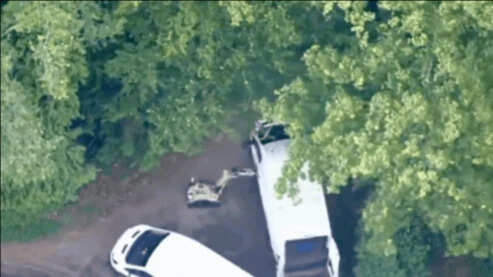
A sharp-eyed resident dialled 999 after noticing suspicious activity in the quiet Gloucestershire village of Whelford. Within minutes, armed units swarmed the area. Soon after, a bomb-disposal robot rolled out to target three white vans parked near RAF Fairford, a critical airfield hosting United States military forces.
If you are wondering how a major counter-terrorism incident right outside a vital strategic military installation started with a local dog walker or passerby rather than automated defense sensors, you are asking the right question. Five men are now in custody, but the operation laid bare vulnerabilities that local communities and defense analysts are scrambling to address.
What Actually Happened in Whelford
The sequence of events began at roughly 12:45 AM on a Sunday. Gloucestershire Police received an urgent emergency call regarding three suspicious vans traveling toward RAF Fairford. A local resident returning home found her driveway blocked by a group of masked and hooded men who scattered into nearby fields upon being spotted.
Realizing something was wrong, she raised the alarm. Armed officers arrived rapidly, arresting five men on suspicion of offenses under the Explosives Act. The legal classification quickly escalated to preparing an act of terrorism.
A 400-metre security cordon was slammed into place. Roughly 85 local households were evacuated, their residents shipped off to a leisure center in Cirencester while experts went to work.
The Robot Operation Explained
Aerial footage broadcast by Sky News and the BBC showed a specialized wheeled explosive ordnance disposal robot navigating between the three vehicles. Two vans already had their rear doors open, revealing large dark objects inside. The remote-controlled machine focused heavily on the third van, attempting to force access or disable potential threats.
Bomb disposal squads treat unattended vehicles near sensitive military zones with extreme caution. Booby traps or unstable materials dictate a hands-off approach. Using a robot keeps human operators out of the blast radius while allowing engineers to breach doors using high-pressure water jets or controlled charges.
While defense minister Wes Streeting urged the public not to speculate on motives while investigations continue, intelligence sources pointed investigators toward examining potential hostile-state involvement, including links to Iran or Russian sabotage operations. RAF Fairford has seen heavy use by US bombers during recent conflicts in the Middle East, making it an obvious focal point for foreign intelligence interest.
Why the Public Response Reveals a Bigger Problem
The most unsettling detail of this entire ordeal isn't the presence of a bomb robot or the high-security lockdown. It's how the plot was uncovered.
The resident who spotted the men noted that initial attempts to contact base security forces went unanswered, forcing her to rely on the standard 999 public emergency line. That a civilian stumbled upon a suspected terror cell staging vehicles directly adjacent to a primary US and UK military airbase raises hard questions about perimeter monitoring.
RAF Fairford's threat level was rapidly spiked to Delta—the highest possible designation—while nearby RAF Lakenheath moved to Charlie alert status. Security protocols inside the wire worked once activated, but the outer perimeter relied entirely on pure luck and a civilian's sharp observation.
What Happens Next
The five suspects remain in police custody undergoing intense interrogation by counter-terrorism officers. Investigators are parsing digital footprints, vehicle registration histories, and potential local accomplices.
For residents of Whelford, the immediate cordon has lifted, but the unease remains tangible. Critical infrastructure defense cannot depend on late-night civilian phone calls. Expect a thorough internal review of outer-perimeter surveillance around British bases housing allied foreign assets before the month is out.