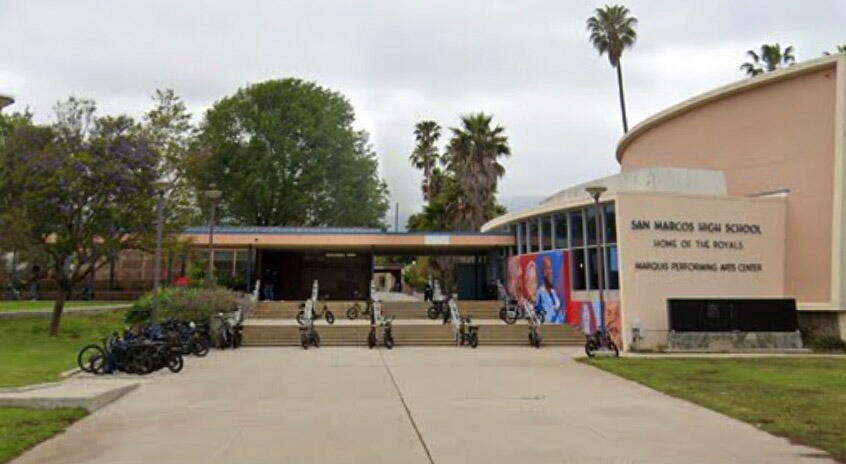
Screenshots don't lie, but standard school punishments usually miss the point entirely. When four students at San Marcos High School in Santa Barbara posted a TikTok featuring artificially darkened skin to mimic a photo of four Black children, the immediate fallout followed a familiar script. Administrators sent emails. The community reacted with shock. The NAACP stepped up to demand real, institutional change instead of empty wrist-slaps.
If you think this is just another isolated case of teenage stupidity on social media, you aren't paying attention. It's a symptom of a much deeper cultural rot that brief suspensions fail to fix.
What Actually Happened at San Marcos High
The controversy blew up after a short video circulated online. The post featured an original image of four Black children in matching school uniforms, followed by a recreated photo of four San Marcos High students posing in a classroom with artificially darkened skin. A caption read, "meet the gc," paired with ninja emojis.
Principal Dare Holdren acted after the incident was flagged through the campus "Safe to Speak Up" reporting tool. The school announced that disciplinary measures were taken against the four students involved. Yet, parents, local advocates, and community members quickly realized that punishing four teenagers doesn't heal an entire campus climate.
Why Standard Punishments Fail
Suspensions feel good on paper. They give administrators a way to say action was taken. But do they change hearts, minds, or systemic biases? Absolutely not.
Teenagers live online. They test boundaries. When schools treat racist incidents as isolated behavioral code violations rather than cultural failures, students learn nothing about empathy or history. They just learn how to hide their behavior better next time.
The local NAACP branch recognized this trap immediately. They aren't asking for a temporary timeout for the individuals involved. They are demanding systemic change across Santa Barbara Unified campuses. They want root causes addressed, not just symptoms swept under the rug.
The Real Cost of Ignoring Campus Culture
Let's be honest about what happens when schools brush these incidents off.
- Students of color bear the emotional tax of attending unsafe environments.
- Administrators scramble for PR damage control rather than structural reform.
- Communities stay divided, cycling through outrage every time a new video drops.
You can't punish your way out of a culture problem. Real accountability requires sustained education, open dialogue, and transparent policies that hold entire institutions responsible for student safety and inclusion.
What Needs to Happen Next
If Santa Barbara Unified wants to move forward, leadership must do more than send stern emails. They need mandatory, continuous anti-bias training that goes beyond a single assembly. They need clear reporting systems that students actually trust. Most importantly, they must invite community stakeholders into the room to build a culture where racist mockery carries undeniable social and academic weight.
Stop waiting for the next viral post to care about what's happening in the hallways. Demand institutional reform before the next video forces your hand.
San Marcos High School takes action after social media post
This short video covers the immediate administrative response and disciplinary actions taken following the San Marcos High School TikTok incident.
http://googleusercontent.com/youtube_content/1