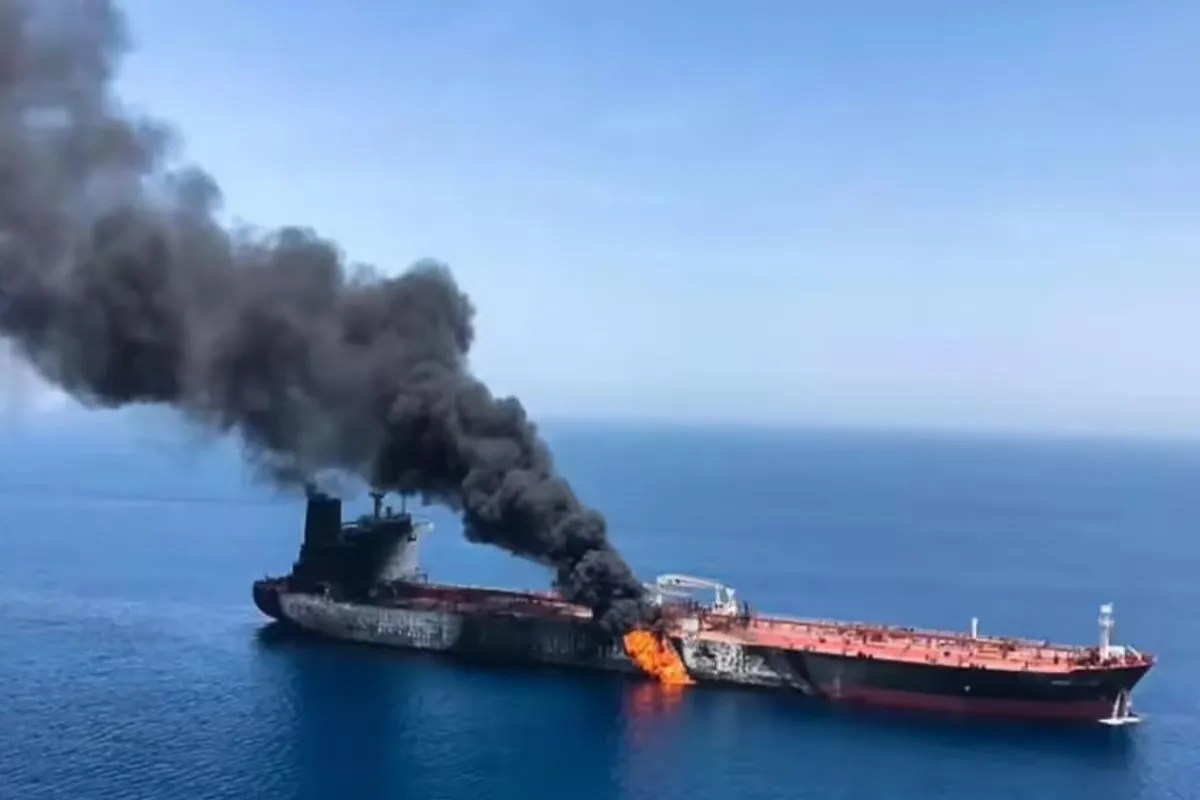
Let's talk about the choke point that actually holds the world economy hostage. When loud blasts echo through the Strait of Hormuz, global markets don't just blink—they panic. Recent reports of explosions in this critical maritime corridor have put shipping companies, energy traders, and military analysts on high alert. Everyone is asking the same anxious question. Are commercial oil tankers finally hitting naval mines in an escalating Middle Eastern conflict?
If you look past the standard media noise, the reality on the water is messy, tense, and entirely high-stakes. Iranian state media pointed fingers at vessels deviating from authorized shipping lanes, hinting at potential collisions with hidden naval mines. But let's be honest about the foggy nature of early war reporting. Independent verification is scarce, vessel identities remain murky, and physical damage assessments are still rolling in. Still, even the rumor of maritime mines in the Persian Gulf is enough to send shockwaves through international crude markets.
Why the Strait of Hormuz Matters More Than Ever
You can talk about renewable energy all day long, but petroleum still runs the engine of global commerce. Roughly a fifth of the world's petroleum consumption squeezes through this narrow water channel daily. It separates Oman and Iran, acting as the ultimate artery for oil-producing giants in the Persian Gulf to reach thirsty markets in Asia, Europe, and the Americas.
When security breaks down here, shipping insurance rates skyrocket overnight. Tanker operators start demanding hazard pay. Some companies even turn off their automatic identification system transponders to sneak through the dark under naval escort, a risky tactic backed by allied military commands trying to keep oil flowing against the odds. But hiding in plain sight doesn't eliminate the underlying hazard of submerged ordnance or rogue regional proxies.
The Twin Pressures on Global Trade Routes
The trouble isn't isolated to the Persian Gulf. Down south near the Bab-el-mandeb strait and the Red Sea, Houthi rebel activities continue to pressure maritime routes, forcing cargo liners and oil carriers on massive, expensive detours around the Cape of Good Hope. When both the Suez-Red Sea corridor and the Strait of Hormuz face simultaneous threats, global supply chains buckle.
Alternative pipelines exist, like the East-West pipeline across Saudi Arabia that bypasses Hormuz entirely. Yet, these alternative pathways lack the massive capacity required to offset a full-scale disruption of tanker traffic. That's why regional actors know exactly how much leverage this geography provides.
What Tanker Operators Are Actually Doing Right Now
If you're running logistics for an energy conglomerate, you aren't waiting for diplomats to solve this. You're paying exorbitant charter fees, rethinking route schedules, and coordinating directly with naval patrols. Security escorts have become standard operating procedure for high-value cargo navigating volatile zones.
Tanker captains are dealing with a brutal risk-reward calculation. Do they brave the narrow channel for a massive payout, or do they idle offshore and wait for clear skies? Most choose to push through, but they do so with mounting anxiety and tighter safety protocols.
The explosions in the Strait of Hormuz serve as a brutal reminder that modern energy security is fragile. Until clear verifications emerge and regional tensions cool down, every barrel of oil moving through those waters carries a heavy invisible tax of risk and uncertainty.