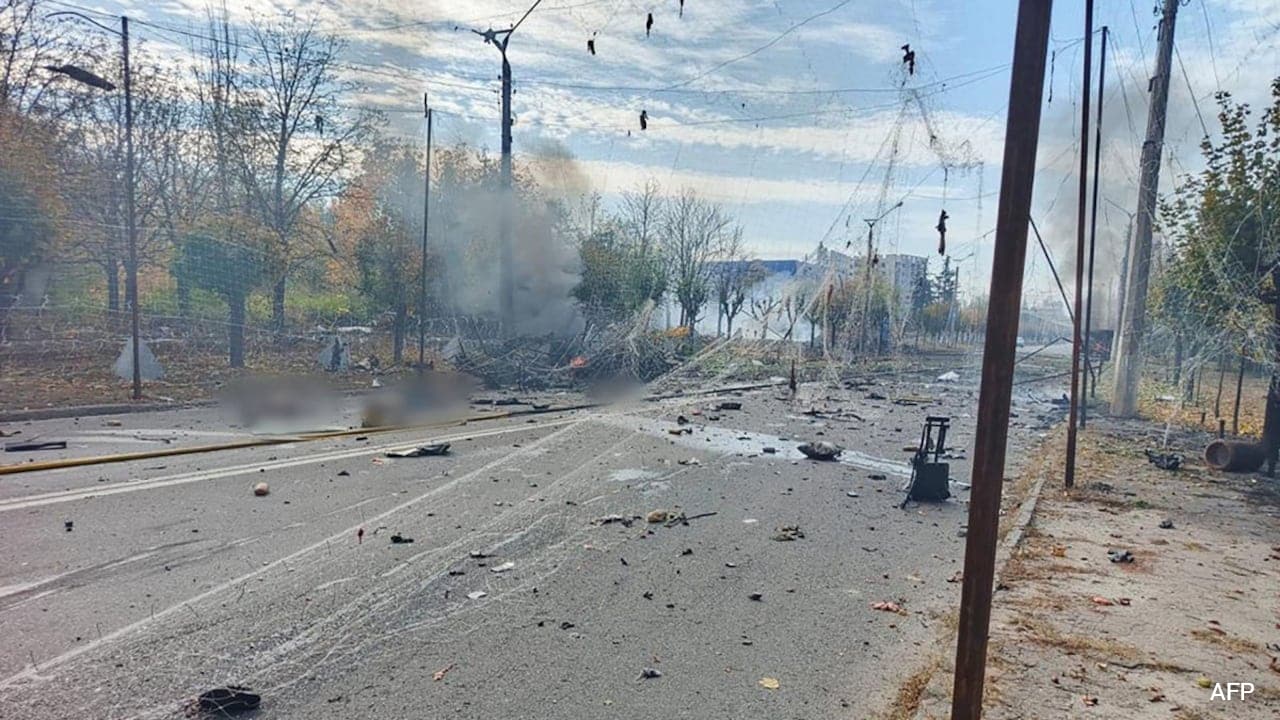
Thirty people died in Kramatorsk when two buses were blown apart on the frontline. It's one of the deadliest single strikes in weeks, and it sets a grim tone as Ukrainian delegations pack their bags for urgent high-stakes discussions in the United States.
You hear about diplomatic breakthroughs on the news, but the reality on the ground tells a completely different story. Nearly five years into a grinding conflict, towns are bleeding out, winter is closing in fast, and civilians are paying the highest price for a stalemate that shows no signs of natural cooling.
The High Cost of the Latest Frontline Strikes
The attack in Kramatorsk wasn't an isolated incident. Just a day prior, a Russian missile leveled a five-storey apartment block in Pryluky, leaving 22 dead—including five young children. When you look at the footage of burnt-out passenger vehicles and collapsed residential structures, the civilian toll is staggering.
Local authorities and international human rights monitors have condemned the attacks as direct violations of humanitarian law. The truth is, energy grids, transport bridges, and civilian neighborhoods are taking the brunt of a war that has shifted into an increasingly brutal phase. Kyiv is bracing for rolling power outages, and mayors are openly admitting that the immediate priority isn't tactical gain—it's basic survival.
What is Actually on the Table in Washington
Ukrainian negotiators are heading to the US for intense strategy sessions with American and European officials. They aren't just arriving empty-handed; they are bringing fresh proposals developed through recent regional contacts.
Washington insiders note that representatives from Britain, France, Germany, and NATO are joining the fold because everyone is genuinely terrified of what this winter will bring. If the energy infrastructure freezes over completely, the humanitarian disaster will scale exponentially.
Yet, trust is at an all-time low. While US Secretary of State Marco Rubio calls the ongoing military stalemate "very dangerous" and warns of massive escalation risks, Ukrainian leadership continues to push for better air defense systems and tighter economic pressure on Moscow.
The Winter Threat and What Comes Next
Diplomacy moves at a snail's pace, but artillery moves fast. As delegations sit down behind closed doors in America, soldiers on the eastern front are fighting tooth and nail to hold the logistics hubs. Kramatorsk remains a critical anchor in the defense belt, and Russian forces are pressing hard against its eastern fringes.
You can't talk peace while the skies are raining ballistic missiles and jet-powered drones. Unless these diplomatic backchannels produce concrete enforcement mechanisms rather than hollow communiques, the bloodshed on the ground will only accelerate before the snow melts.