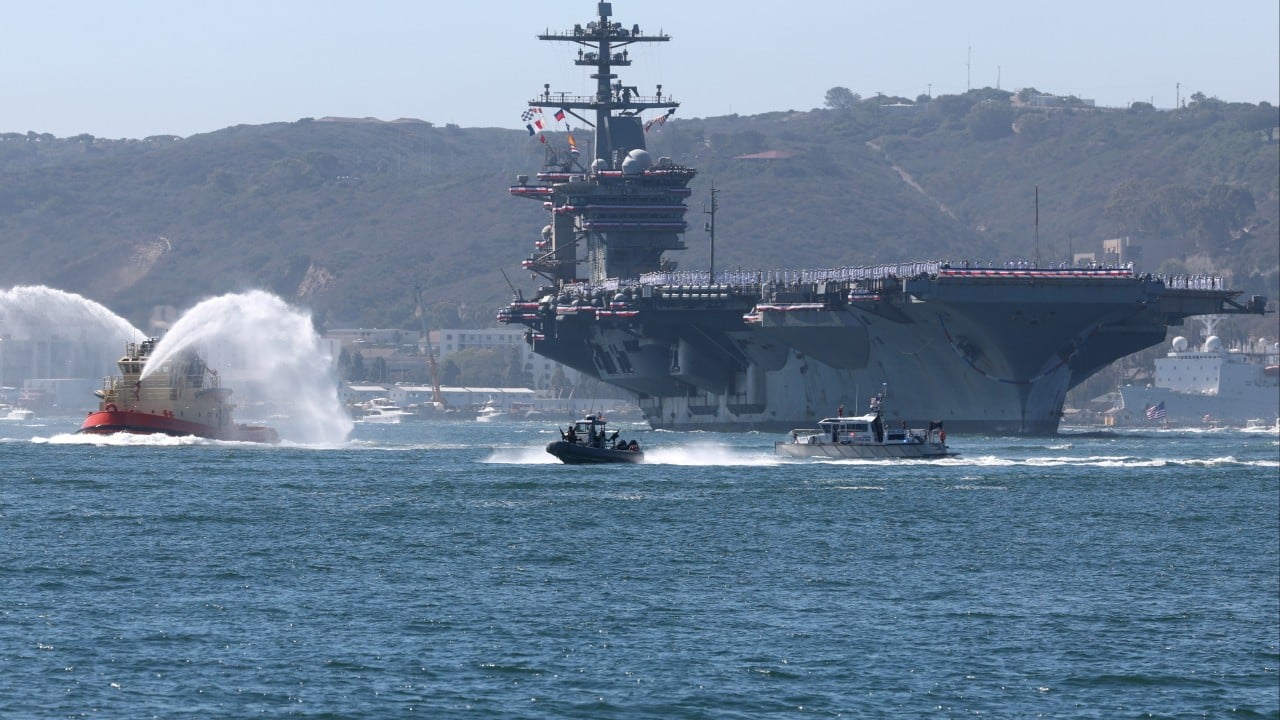
Warships come and go, but when a nuclear-powered aircraft carrier spends months away from home in one of the most volatile regions on earth, people notice. The USS Abraham Lincoln recently pulled back into San Diego after a grueling, extended deployment in the Middle East. Sailors kissed the ground. Families cheered on the pier. Operations wrapped up.
Yet, beneath the homecoming banners lies a heavier reality about modern naval warfare. These extended missions aren't normal. They're symptoms of a strained fleet trying to keep up with an unrelenting global pace. If you look past the standard press releases, you see a clear picture of what life is actually like on a Nimitz-class carrier stuck in perpetual crisis response.
The Reality of Extended Deployments
Deployments used to have hard stop dates. Six months was the standard. Sailors planned their lives around it. Families knew roughly when to expect their loved ones back.
Those days are largely gone.
The USS Abraham Lincoln and its strike group faced repeated extensions. When tensions flare in the Middle East, the Pentagon doesn't just pull ships away because their calendar says it's time. They keep them on station until a relief force arrives, which often leads to severe delays. Months bleed into more months.
Imagine living on a floating city with thousands of other people, running 24-hour flight operations, enduring extreme heat, and constantly waiting for the word that you're heading home, only to be told to stay out a little longer. The psychological toll on the crew is immense. Morale holds up because sailors are professionals, but fatigue accumulates. Equipment takes a beating too. Saltwater, constant flight deck vibrations, and running engines at high output mean maintenance teams face a massive backlog the moment the anchor drops.
What the Strike Group Actually Did Out There
Carriers don't sit still. During its time operating under US Central Command, the USS Abraham Lincoln wasn't just cruising around. It served as a primary mobile air base for regional deterrence and active defense missions.
When regional actors launch drone attacks or ballistic missiles, carrier air wings are often the first line of response or defense. Pilots flying F-35C Lightning IIs and F/A-18E/F Super Hornets spend hours in the air executing defensive sweeps, intercepting threats, and protecting commercial shipping lanes.
This isn't a training exercise. It's high-stakes operational pressure. Every launch and recovery on the flight deck carries inherent danger. Mechanics work in deafening, dangerous conditions to keep jets armed and fueled. The sheer logistical weight of keeping an entire strike group supplied with food, fuel, ordnance, and spare parts across thousands of miles of ocean is staggering.
The Strain on the US Navy Fleet
San Diego is welcoming home thousands of sailors, but the celebration masks a deeper structural issue. The US Navy is simply too small for the number of commitments it has.
We have fewer operational hulls than we did decades ago, but global flashpoints have multiplied. This math creates a treadmill effect. A ship comes home, goes into an intensive maintenance overhaul, trains up, deploys, stays extended, comes back exhausted, and repeats the cycle.
Shipyards are jammed. Maintenance delays are common. When carriers stay deployed longer than planned, it eats into the time they need for deep overhauls. That delays the next deployment for the next ship, creating a domino effect across naval bases on both coasts.
Naval leaders talk constantly about readiness. True readiness requires downtime. It requires sailors to decompress, see their families, and reset. It requires engineering teams to completely tear down turbines and electronics without rushing. When you skip those steps, you invite preventable accidents and mechanical failures down the road.
Looking Ahead at Naval Operations
The return of the USS Abraham Lincoln to San Diego brings temporary relief to one weary crew, but the global chessboard doesn't pause. Other ships are already steaming out to take their place, facing the exact same pressures, the same extended timelines, and the same relentless tempo.
Until the broader questions of fleet size, shipyard capacity, and strategic overextension get solved, homecoming piers will keep seeing the same emotional scenes—and the same quiet exhaustion behind the smiles.
Take time to understand the human cost behind the headlines. Behind every ship movement are thousands of individuals missing milestones, birthdays, and quiet weekends at home.