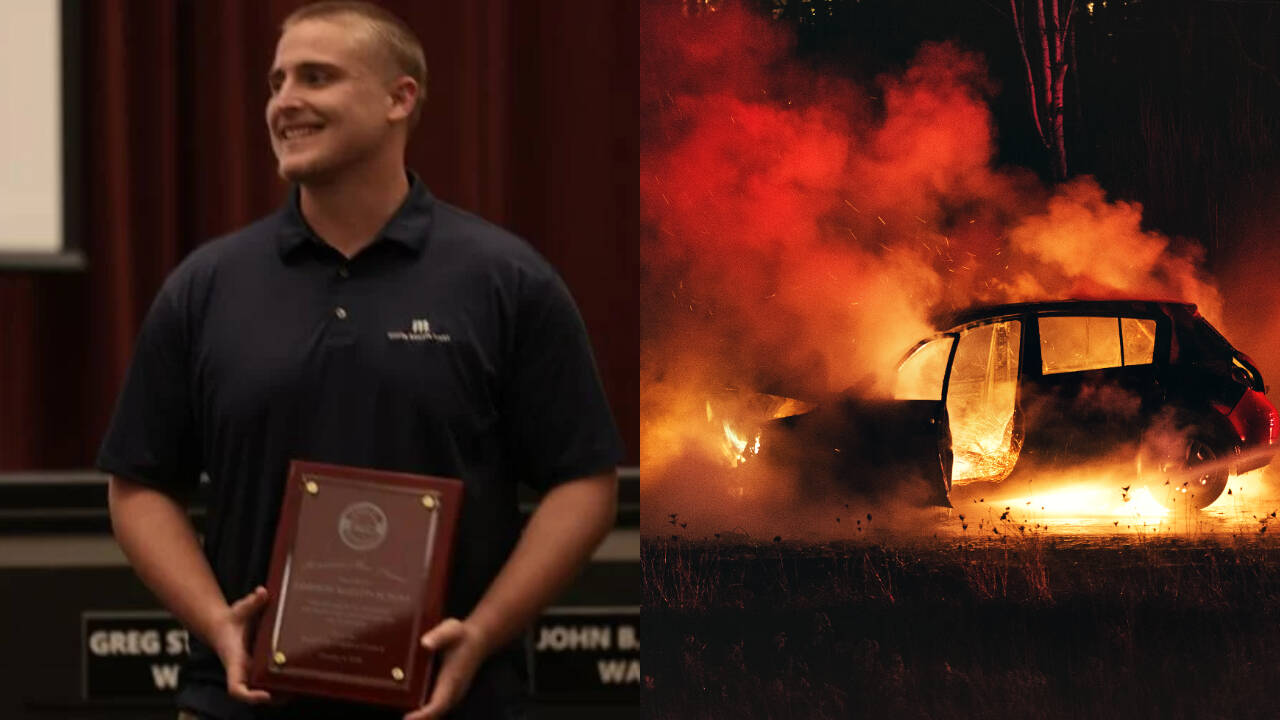
Heroism isn't born in a classroom, and it certainly doesn't wait for a clean script. When a car careened out of control on a Houston road, Jameson Mallon-Echols didn't stand around wondering what to do. The junior mechanical engineering student and football captain at South Dakota Mines sprang into action, pulling trapped teenagers from a burning vehicle long before emergency crews arrived. Months later, Rapid City officially honoured him with an Act of Heroism Award, marking him as the recipient of the city's first Hometown Hero award. But the real story isn't the trophy. It’s what happens when everyday instincts collide with sudden, terrifying danger.
When Routine Driving Turns Into a Race Against Fire
Picture this. You're driving to a friend's house on a normal afternoon. Suddenly, a vehicle loses control, crosses the median, and smashes into a violent wreck. That's exactly what happened on June 11. Three teenagers were trapped inside the mangled metal, including a 16-year-old driver who was severely injured and pinned by twisted wreckage.
Most people freeze or reach for their phones to record. Mallon-Echols pulled over immediately, dialed 911, and ran toward the danger zone.
The vehicle wasn't just totaled; it was actively catching fire. Flames began licking up underneath the driver's seat. Mallon-Echols didn't have a fire extinguisher or a heavy rescue kit. He used his own shirt to smother the spreading flames while another bystander managed to release the jammed seatbelt.
The Physical Reality of Extricating a Victim
Extracting someone from a crushed car is nothing like what you see in Hollywood movies. It’s messy, exhausting, and dangerous.
The 16-year-old driver wasn't just stuck by a seatbelt. Jagged pieces of metal held him captive inside the smoking wreckage. Working fast against an encroaching wall of fire, Mallon-Echols and another bystander physically wrestled the metal framing away from the teenager.
They finally freed him and carried him across the road, putting vital distance between the victim and the car. Moments later, the entire vehicle was completely engulfed in flames. If they had hesitated for even thirty seconds, the outcome would have been tragic.
Once paramedics arrived, Mallon-Echols didn't just drive away. He stayed at the scene until the early hours of the morning, helping police officers piece together what happened.
Beyond the Football Field and the Engineering Lab
At South Dakota Mines, Mallon-Echols balances a demanding mechanical engineering curriculum with his duties as a football captain. That kind of schedule builds discipline, but handling high-pressure crises requires something deeper.
When Rapid City Common Council members, including Ward 5 Councilwoman Laura Armstrong, presented him with the Act of Heroism Award alongside university leaders like President Brian Tande and head football coach Charlie Flohr, they weren't just celebrating a single moment of bravery. They were recognizing the exact kind of character that shows up when nobody is watching.
True leadership isn't just about calling plays on a football field or solving equations on an exam. It’s about stepping up when a human life hangs in the balance.
Take a cue from how Mallon-Echols handled the chaos. Keep your head clear, assess the immediate physical threat, and act decisively before small problems turn into catastrophes.