You wouldn't normally expect a president to spend precious pre-midterm days flying into Grand Island, Nebraska. After all, Nebraska is supposed to be safe ground. It's ruby red, farm-heavy, and entirely predictable on presidential election maps.
Yet Donald Trump's rally at the Pinnacle Bank Expo Center isn't about padding an ego win in a state he comfortably carries. It's about an unexpected political fire alarm.
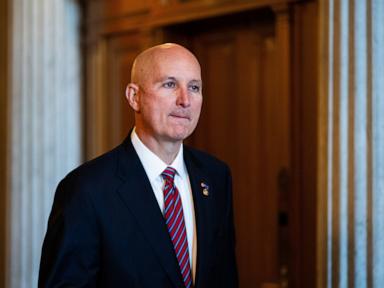
If you look closely at the numbers behind the midterms, you realize why the White House has to shore up places that look secure from a distance. Republican Senator Pete Ricketts is facing a surprisingly tough challenge from independent candidate Dan Osborn, with recent polling showing a margin as tight as four points. At the same time, Governor Jim Pillen is fending off a push from Democrat Lynne Walz.
Suddenly, a state that hasn't sent a Democrat to the Senate in two decades looks like a high-stakes battleground.
The Economic Squeeze on Rural Voters
Politics always comes down to wallets, and Nebraska's primary economic engine is feeling the heat. Cattle ranchers and farmers aren't just dealing with normal agricultural ups and downs. They're staring at diesel prices sitting around $6.37 a gallon, alongside soaring costs for fertilizer and heavy equipment.
Worse, federal decisions regarding foreign beef imports have alienated parts of the state's powerful agricultural sector. When ranchers who usually bleed Republican see their profit margins squeezed by international trade policies, party loyalty gets tested.
Independent challenger Dan Osborn has capitalized on these local frustrations, running a populist campaign that targets working-class anxiety. That strategy works brilliantly in a state where voters pride themselves on independence.
National Democrats smell blood in the water. They know that if they can make a race competitive in a place like Hall County—where Trump won by comfortable margins just cycles ago—the broader map is shifting underneath Washington's feet.
Why Rallies in Safe States Are the New Swing State Strategy
Conventional wisdom says candidates should camp out in Philadelphia, Phoenix, or Detroit during the closing weeks of a campaign. But modern midterm math requires a different playbook.
Trump is focusing heavily on rallies in solid red or exurban territories where his base lives, rather than courting hostile suburban voters in major metro areas. The goal isn't persuasion. It's mobilization.
In places like Grand Island, the campaign needs to convince disaffected or exhausted conservatives that staying home is worse than voting against their current frustrations. When diesel is over six bucks a gallon and fertilizer prices spike, apathy is the Republican party's biggest enemy.
Senator Ricketts and Governor Pillen desperately need a massive turnout surge to put distance between themselves and their opponents before ballots are counted. Trump's visit is designed to jolt the local machinery awake, bring thousands of fired-up voters to the Nebraska State Fairgrounds, and dominate local news cycles for a vital 48-hour window.
What This Means for the Rest of the Midterm Map
Nebraska is serving as a canary in the coal mine for rural America. If traditional Republican strongholds require emergency presidential intervention to stay in the column, the congressional balance of power is on a razor's edge.
Voters aren't just voting on abstract national culture wars anymore. They are voting on the price of feed, the cost of moving grain to market, and whether Washington actually understands rural economics.
Keep an eye on how these tighter-than-expected races shake out. When deep-red states start sweating in October, no incumbent is safe.
Check your local voter registration status, look closely at down-ballot agricultural policies, and pay attention to early voting turnout numbers in your district before election day arrives.