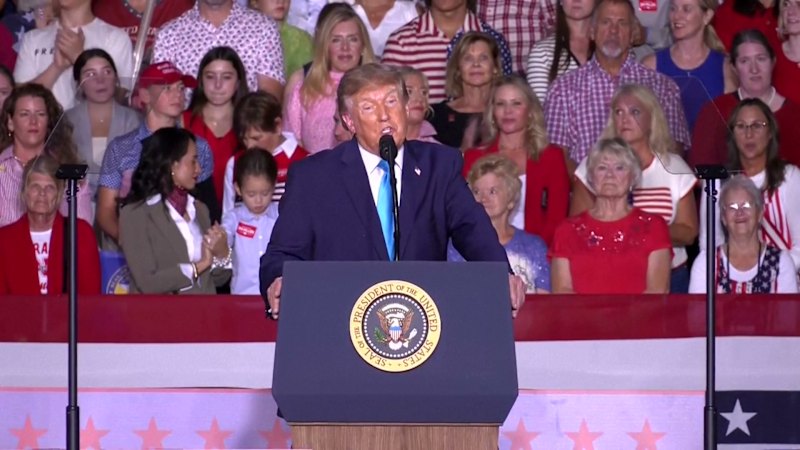
Political rallies rarely stick to the script. But when Donald Trump stepped up to the microphone in Nebraska, his rhetoric took a sharp, alarming turn toward domestic vulnerability. He floated a stark scenario, suggesting to the cheering crowd that Iran could target major American metropolitan areas like Los Angeles or San Diego.
It wasn't a casual slip of the tongue. It was a deliberate rhetorical device designed to stoke fear, question current national security postures, and draw a direct line between foreign policy decisions and local safety in blue states.
Let's break down why this specific remark matters, what it reveals about modern campaign rhetoric, and how voters in major coastal hubs are reacting to being thrust into the geopolitical crosshairs.
The Rhetoric of Fear and Foreign Threats
Campaign trails demand high-stakes drama. Nuance dies under stadium lights. By singling out Los Angeles and San Diego, Trump tapped into deep-seated anxieties about border security, maritime vulnerabilities, and asymmetric warfare.
Naming specific iconic cities does something abstract threats fail to achieve. It personalizes the danger. When a politician talks about national security in vague terms, people tune out. When they mention your local zip code or a familiar skyline, you listen.
Iran's capabilities and intentions are heavily debated by intelligence agencies. Yet, dropping a major city's name into a rally speech bypasses technical debate entirely. It creates an immediate visceral reaction.
Why California Ports and Metros are Political Targets
Los Angeles and San Diego aren't chosen at random. They represent the economic engine of California, a state that sits firmly on the opposite end of the political spectrum from Trump's core base.
- Economic Importance: The Ports of Los Angeles and Long Beach handle a massive share of total US import cargo. Disrupting them would cripple national supply chains.
- Military Presence: San Diego hosts one of the largest naval fleets in the world, making it a strategic military hub rather than just a tourist destination.
- Political Contrast: Targeting left-leaning population centers plays well with audiences looking for validation that coastal elites are blind to global threats.
Politicians use geography as shorthand. Mentioning California allows speakers to bundle multiple grievances—immigration, crime, state taxes, and foreign threats—into a single sentence.
The Reality of Urban Defense and National Security
Military analysts often cringe at political hyperbole. Defending American soil involves multi-layered missile defense systems, naval patrols, and intelligence networks that operate around the clock, regardless of who occupies the White House.
Yet, public perception rarely aligns with military reality. When a prominent political figure suggests a foreign adversary can easily strike a domestic city, it erodes public trust in institutional safeguards.
People want to know if they're actually safe. They look at Patriot missile batteries, homeland security alerts, and local law enforcement preparations. Blurring the line between political rallying cries and actual threat assessments makes everyday citizens collateral damage in a war of words.
Shifting Focus from Policy to Peril
Elections are supposed to be about economic plans, inflation rates, and legislative track records. Remarks about foreign adversaries "taking out" domestic cities yank the conversation back into pure survival mode.
When fear takes the wheel, policy debates stall. Voters stop asking about housing costs or infrastructure spending and start wondering about air defense alerts. That's the strategic utility of such remarks. They crowd out opposing talking points with sheer, unfiltered drama.
We've seen this playbook before. High-impact statements dominate news cycles for days, pushing complex policy discussions to the margins.
Pay attention to how local leaders respond. Mayors and governors in targeted cities find themselves forced to issue statements reassuring residents, turning local officials into accidental foreign policy commentators.
Evaluate the source, look past the shock value, and keep your focus on what actually changes at the policy level. Real security comes from steady institutional competence, not stadium bravado. Stay alert, stay critical, and don't let campaign rhetoric dictate your sense of safety.