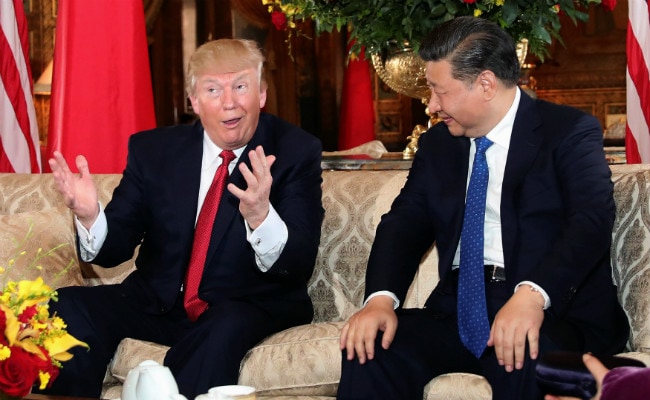
Foreign policy usually runs on predictable scripts. You call a strategic rival your top systemic threat, you impose tariffs, and you keep advanced military hardware locked safely away from their doorstep. But Donald Trump rarely follows the script. When U.S. Ambassador to China David Perdue revealed that Trump casually asked Chinese leader Xi Jinping if Beijing wanted to buy American-made weapons, it sent immediate shockwaves through Washington and foreign capitals alike.
Was it a slip of the tongue, a strategic trial balloon, or simply a classic transactional pitch from a president who views everything through the lens of a commercial deal?
The resulting diplomatic whiplash exposed how chaotic modern superpower relations can get. While the State Department rushed to clarify that U.S. law strictly prohibits arms sales to China and that no such offer exists, Trump himself added fuel to the fire. Instead of offering a flat denial, he mused that China probably wants superior U.S. equipment anyway and suggested "maybe it's a good idea"—before pivoting to claim the ambassador must have meant Taiwan.
Breaking Decades of Strategic Doctrine
Selling high-end military technology to Beijing would shatter decades of bipartisan consensus. Ever since the Tiananmen Square crackdown in 1989, the United States and its European allies have maintained strict arms embargoes against China. Washington spends billions of dollars preparing its armed forces for a potential Pacific conflict against a modernized Chinese military. Handing over American defense tech to a primary adversary defies conventional logic.
Yet, trying to understand this through a purely ideological lens misses the point entirely. Trump operates like a real estate developer sitting across a negotiation table. For him, hardware is product, and product is leverage. If you can monetize your technological dominance while tying a rival's supply chain or creating economic dependence, traditional diplomatic taboos start looking negotiable.
The Taiwan Complication and the Art of the Leverage Chip
This whole episode didn't happen in a vacuum. It arrived right alongside intense scrutiny over a delayed $14 billion weapons package destined for Taiwan. Observers have pointed out that Trump previously labeled that delayed package a useful negotiating chip in broader trade and security talks with Beijing.
When you treat sovereign security commitments as bargaining chips, allies get nervous. Taiwan relies on U.S. weapons under the Taiwan Relations Act to maintain a credible defense against cross-strait aggression. If the White House signals that arms sales to Taipei—or conversely, hypothetical commercial pitches to Beijing—are open for transactional horse-trading, the stability of the entire Indo-Pacific region becomes precarious.
Xi Jinping understands this game well. During his high-profile state visit to Washington, the Chinese leader pressed hard for the U.S. to curb its official backing of Taiwan independence and exercise absolute prudence. If Beijing hears mixed signals from the Oval Office about who gets weapons and who doesn't, they will test the boundaries of that ambiguity.
What the Administration's Mixed Signals Actually Mean
The glaring contradiction between what Ambassador Perdue claimed on television, how the State Department scrambled to contain the fallout, and how Trump spun the remarks highlights a deeper operational reality. The current administration lacks a unified, airtight message on its China strategy.
You see two distinct forces pulling in opposite directions. On one side, national security hawks view Beijing through an unyielding lens of strategic competition and technological containment. On the other side sits a transactional executive who believes that every single point of friction can be smoothed over with a massive commercial agreement or a personal summit.
When those two mindsets collide publicly, you get statements that spark international panic and domestic confusion.
Looking Past the Headlines
Do not expect the United States to actually start shipping fighter jets or missile defense systems to the People's Liberation Army anytime soon. Domestic legal barriers are formidable, and institutional resistance within the Pentagon and Congress would block any such move dead in its tracks.
The real takeaway isn't that a historic arms deal is around the corner. The real takeaway is that the guardrails keeping traditional great-power competition predictable are eroding. Diplomacy is no longer about steady containment; it is a high-stakes, unpredictable performance where every boundary is tested for leverage. Watch how upcoming summits handle the Taiwan question, because the real bargain is happening behind closed doors while the public catches up to the noise.