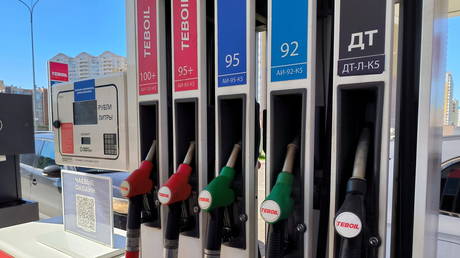
The United States just threw out the rulebook on dyed diesel. President Trump signed an executive order waiving off-road restrictions to combat soaring fuel prices, letting farmers and commercial drivers pump tax-free red-dyed diesel straight into their highway trucks without penalty. Naturally, Canadian drivers are looking south, watching pumps trickle cheap fuel, and wondering if our own rules are about to break.
Don't hold your breath.
If you think you can fill up with cheap red diesel across the border and cruise back into Canada without a care, you are walking into an expensive trap. Provincial finance ministries are not budging, highway enforcement officers are actively looking for the signature red tint, and the penalties for getting caught are severe.
The Rules North of the Border
In Canada, dyed diesel is strictly reserved for off-road machinery. Tractors, combines, logging equipment, and construction vehicles burn red-dyed fuel because they don't use provincial public roads and highways. They get an exemption from road taxes.
Road vehicles pay taxes for a reason: highway maintenance. Every province and territory relies heavily on fuel tax revenue to pave asphalt, fix potholes, and keep commercial supply chains moving. Saskatchewan's Ministry of Finance made this crystal clear when pressed on potential changes, stating that opening up the farm fuel program for on-road use would gut the highway maintenance budget.
Federal excise tax rules don't mandate special treatment for colored fuel, leaving enforcement entirely up to provincial and territorial fuel tax acts. When prices spike, agricultural leaders like Keith Currie of the Canadian Federation of Agriculture might welcome relief, but provincial treasuries depend on that road tax money too much to hand out a free pass.
Crossing the Border With a Tank Full of Red
Can you technically cross the international boundary with fuel in your tank? Yes. Is it legal to bring fuel back? It comes down to how you transport it and where it ends up.
According to tax and customs experts like lawyer Rob Kreklewetz, bringing a jerry can of red diesel across the border is legally similar to declaring any imported taxable good. If you fail to declare it, customs officials can seize it and hand down harsh penalties.
The real danger starts the moment that red fuel enters the fuel tank of a registered highway vehicle.
Law enforcement officers and provincial finance inspectors carry portable dipsticks. Pull into an administrative checkpoint, let them drop a test stick into your truck's tank, and watch it come out red. That simple color change is instant proof of a tax infraction.
The Cost of Getting Caught
Trying to shave a few cents off your fuel bill by smuggling or utilizing American red diesel on Canadian pavement is a losing game. Fines vary wildly by province, but none of them are gentle.
In Ontario, getting caught with colored fuel in a plated vehicle's tank lands you under the Fuel Tax Act with fines ranging from $200 to $1,000 per offense. Head further west to Saskatchewan, and the stakes multiply. Violating their Fuel Tax and Road Use Charge Act carries penalties hitting up to $10,000 for individuals and a staggering $50,000 for corporations.
When you do the math, a modest discount on a tank of fuel vanishes the second an inspector dips your tank. Stick to clear diesel for your highway commute, keep the red fuel in your off-road equipment where it belongs, and avoid learning an expensive lesson at a provincial roadside checkpoint.