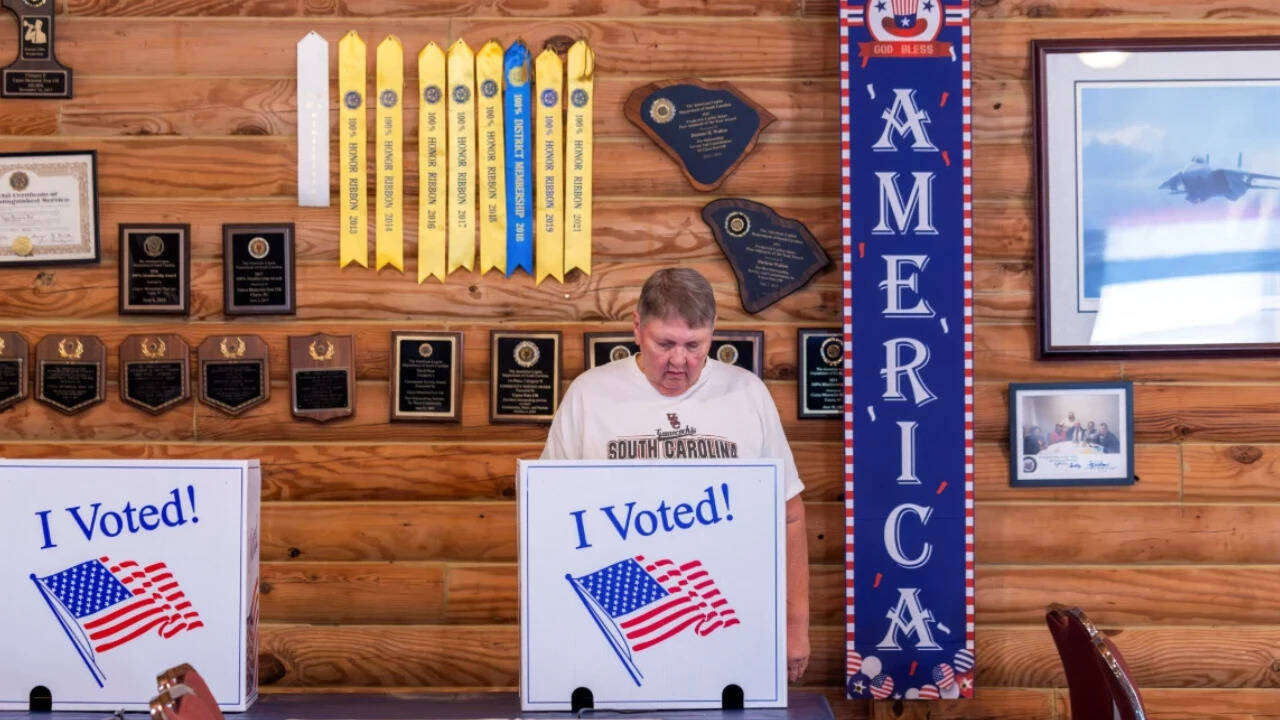
You didn't expect the Pentagon to run ballot security. Yet here we are.
Defence Secretary Pete Hegseth recently issued a memo directing military intelligence and cyber units to step up and protect American election systems for the upcoming midterms. If that sounds unusual, it is because civilian agencies traditionally handle domestic vote security. But the landscape shifted drastically when Donald Trump significantly reduced the role and capacity of the Cybersecurity and Infrastructure Security Agency, known as CISA.
When you dismantle the civilian firewall, the military ends up filling the gap. Critics call it political theater. Administration officials call it necessary defense against foreign threats. Let's look at what's really happening beneath the headlines.
The Civilian Vacuum Left Behind
CISA was established back in 2017 specifically to shield critical infrastructure, including state and local voting systems, from digital intrusion. It functioned as a civilian bridge between federal intelligence and local election workers who needed technical support without federal overreach.
That framework changed. The Trump administration gutted CISA's budget, reduced its mandate, and forced out veteran experts early in 2025. Local officials lost their primary point of contact for cybersecurity audits, vulnerability testing, and threat intelligence.
When early voting started ahead of the November 3 midterm elections, the federal government realized it had a massive security void. Instead of restoring civilian capabilities, the administration turned to the National Security Agency and US Cyber Command.
David Becker, a former Justice Department attorney who now leads the Center for Election Innovation & Research, didn't mince words about the pivot. He pointed out that if the administration genuinely cared about assisting local election offices, firing cyber experts months prior made zero sense. Waiting until the eleventh hour to deploy military cyber assets leaves little time for meaningful integration with county-level officials.
What Hegseth's Memo Actually Directs
Hegseth’s September 22 memo instructs defense intelligence officials to marshal all available resources to block foreign malign influence. The stated goal is simple: ensure every lawful voter can cast a ballot free from foreign intimidation or coercion.
Sounds straightforward on paper. In practice, mixing military intelligence apparatuses into domestic civilian elections makes people nervous.
The NSA and Cyber Command possess unmatched technical capabilities. They spot foreign threat actors attempting to probe voter registration databases or spread disinformation campaigns. But they operate under military command structures designed for national defense against external adversaries, not domestic administrative oversight.
State and local election boards handle the actual mechanics of voting. They manage poll workers, physical machines, and vote-counting tabulation. Inserting military intelligence units into this mix creates friction. Local administrators don't always speak the same language as military cyber operators.
The Core Controversy Over Election Security
You have to look at the broader political context to understand why this move is so contentious. Trump has spent years casting doubt on American voting integrity, pushing unsubstantiated claims about widespread fraud while attempting to rewrite established voting procedures.
While the Supreme Court recently blocked attempts to restrict mail-in voting, it permitted the use of a federal database to verify voter citizenship. Civil rights groups and Democratic lawmakers worry that combining aggressive federal database checks with military-backed oversight could suppress legitimate voters or intimidate marginalized communities.
When defense agencies monitor cyber networks, the line between protecting against foreign hackers and surveilling domestic political activity gets blurry. Americans are naturally protective of civilian control over elections. Keeping the military at arm's length from the ballot box used to be a bipartisan norm.
What Happens Next on Election Day
Early voting is already underway, and the November 3 election is fast approaching. Local election officials are caught in the middle of a federal power struggle. They need robust cybersecurity defenses because foreign adversaries like Russia, China, and Iran constantly probe US infrastructure. At the same time, they want independence from partisan directives.
If you're watching the midterms, ignore the political posturing and focus on the county level. Local election supervisors are the real line of defense. They are the ones updating software, testing machines, and certifying results.
Check your local county election office website to verify your registration status directly. Don't rely on third-party apps or social media feeds for voting logistics. Secure your vote locally because federal policies will keep shifting long after the ballots are counted.