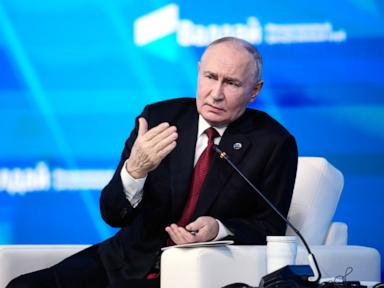
Geopolitical posturing rarely stays quiet for long. When Russian President Vladimir Putin steps up to address the Valdai Discussion Club in Moscow, foreign policy analysts immediately parse every single word for shifts in nuclear doctrine. Recently, Putin raised alarms once again, warning that Moscow stands ready to deploy every weapon in its military arsenal should Russian territory or strategic exclaves like Kaliningrad face direct aggression.
You might wonder why these specific warnings keep happening right now. The escalation stems from ongoing friction surrounding long-range Western weaponry supplied to Ukraine and mounting tensions along NATO's eastern flank. When world leaders toss around threats involving entire military arsenals, understanding the mechanics behind the rhetoric matters far more than just reacting to the headlines.
The Reality Behind the Rhetoric
Let's look at what was actually said during the latest Moscow gathering. Putin stopped short of explicitly spelling out a nuclear first-strike policy, yet he emphasized that Russia possesses unique military capabilities that other nations simply do not match. He noted that Moscow will freely determine which forces and systems to employ if its borders or sovereign territories come under severe threat.
NATO leadership isn't sitting back silently, either. Officials like NATO Secretary-General Mark Rutte dismissed the remarks as uncalled-for nuclear posturing, reiterating that the alliance remains purely defensive. Yet, the friction remains palpable. Baltic exercises, maritime surveillance operations, and ongoing drone strikes inside Russian borders keep pushing both sides closer to a dangerous security dilemma.
Why Kaliningrad Became the Ultimate Flashpoint
Geography makes tensions uniquely volatile here. Kaliningrad sits tucked away on the Baltic Sea, physically separated from mainland Russia and sandwiched directly between NATO members Poland and Lithuania. Because of its isolated position, Moscow views the exclave as highly vulnerable to potential blockades or military isolation.
When Putin warns about using the full range of military means to protect territories like Kaliningrad, he is signaling red lines to Western planners. Analysts tracking regional defense posture note that any miscalculation in this specific corridor could trigger a direct confrontation between nuclear-armed states. It's a high-stakes game of chicken where neither side wants to blink first, yet both keep increasing the operational tempo near the border.
Separating Bluff From Doctrine
Is this rhetoric mere political theater, or should neighboring countries genuinely prepare for the worst? Military historians point out that official Russian military doctrine permits the use of nuclear weapons if the very existence of the state faces an existential threat. By blurring the lines between conventional border skirmishes and total arsenal deployment, Moscow aims to deter Western capitals from greenlighting deeper strikes inside recognized Russian borders.
At the same time, Western defense ministries are adapting their own deterrence strategies. Intelligence sharing, electronic warfare upgrades, and reinforced naval patrols in the Baltic Sea demonstrate that NATO is taking no chances with Russian red lines.
Keep a close eye on upcoming diplomatic channels and military deployments in the Baltic region. The rhetoric might sound repetitive, but the margins for error are shrinking daily.
Putin: Russia Will Use "All Weapons" if Kaliningrad Faces Direct Attack
This video provides direct coverage and footage of Vladimir Putin's statements regarding the potential use of Russia's full military arsenal during his Valdai Discussion Club address.
http://googleusercontent.com/youtube_content/1