History loves neat labels, but economic reality is messy. For decades, standard narratives taught us that capitalism burst onto the scene during the industrial revolution like a bolt from the blue, sweeping away sleepy feudal workshops overnight. Historians like Guillaume Calafat remind us that reality was far more nuanced. Long before steam engines and modern factories dominated the landscape, wealth was accumulated, investments were made, and market risks were calculated on a massive scale.
The core paradox is simple yet startling. You had active, aggressive capitalistic actors roaming Mediterranean ports and European trade routes centuries before a unified system called "capitalism" ever existed.
The Myth of the Sudden Industrial Break
We love to imagine historical epochs changing gears overnight. Textbooks love clear demarcation lines. Yet, merchant networks in the seventeenth and eighteenth centuries operated with sophisticated financial instruments, bills of exchange, and joint-stock funding long before mass wage labor became the societal norm.
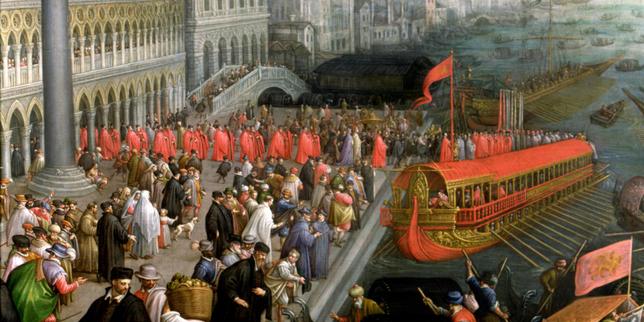
Think about maritime commerce in Venice, Genoa, or Marseille. Investors pooled money, insured risky voyages, and tracked profit margins with clinical precision. They acted like modern investors because they were taking calculated risks for financial returns. But calling their entire society "capitalist" misses the mark. Why? Because the underlying social fabric was still tied to guild regulations, seigneurial privileges, and traditional legal structures. More details on this are covered by Associated Press.
Capitalists Without a Capitalist System
What does it actually mean to have capitalistic practices without the overarching system? It means accumulation was happening in pockets, driven by specific commercial elites, without transforming the entire base of human labor.
Most people worked the land or practiced traditional crafts under tight community rules. Wage labor wasn't the default mode of survival for the average person. Merchants could amass fortunes, speculate on commodities, and fund overseas expeditions, while the local peasant economy functioned on entirely different rhythms.
Fernand Braudel famously wrestled with this exact distinction, separating everyday material life from market exchange, and market exchange from high-level capitalist domination. When you look closely at early modern trade archives, you see bustling financial markets operating inside societies that would look foreign to any modern economist.
Why This Distinction Still Matters Today
Getting this history right changes how we view modern economic structures. If capitalism wasn't just an inevitable technological byproduct of the steam engine, but rather a long, contested historical construction, then our current economic arrangements aren't permanent laws of nature either. They are human systems, built piece by piece over centuries through legal shifts, political choices, and changing social norms.
Stop viewing the past as a straight line from primitive peasants to modern corporate tycoons. The history of wealth is full of false starts, hybrid models, and surprising contradictions.
Capitalisme : histoire d'un mot, avec Guillaume Calafat
This video provides an in-depth discussion on how economic historians like Guillaume Calafat approach the shifting definitions and origins of capitalist terminology.