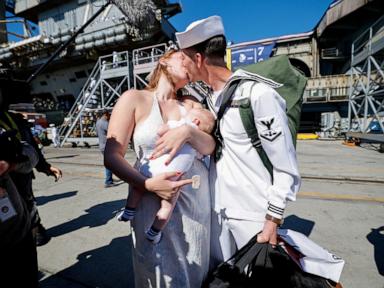
When the USS Abraham Lincoln finally turned its bow back toward San Diego, it wasn't just completing a transit across the Pacific. It was ending one of the most grueling, controversial, and exhausting stretches in modern American naval history.
For roughly 5,000 sailors and marines, the journey home marked the end of a continuous, uninterrupted marathon at sea spanning well over 250 days without a proper port call. It smashed expectations, rewrote operational records, and exposed severe cracks in how the U.S. Navy manages fleet endurance under acute geopolitical pressure.
Most headlines celebrated the sheer statistics. But the numbers hide a much darker human toll that military leaders are now forced to reckon with.
The Mission That Refused to End
The deployment began in November 2025. Naval Base San Diego waved goodbye to the Carrier Strike Group 3 flagship, expecting a standard, predictable Pacific rotation.
Then reality intervened. The ship was redirected west into the Middle East, diving headfirst into high-stakes operations supporting U.S. actions against Iran. The schedule evaporated. Instead of rotating home in the spring, the Lincoln stayed put, holding down a critical and volatile corner of the globe.
Months turned into nearly a year. The ship's crew launched thousands of sorties while surviving on relentless repetition, salt water, and dwindling supplies. By mid-summer, the Lincoln had easily eclipsed previous modern benchmarks for continuous time underway, beating out the USS Dwight D. Eisenhower's 202-day record set during the COVID-19 pandemic.
People love a good record. Sailors trapped in a floating steel box for nearly ten months view things differently.
Behind the Steel and Salt Water
You cannot keep 5,000 people isolated from land for that long without things breaking down. And they did.
As the deployment stretched past the eight-month mark, troubling reports began leaking past naval censorship. Crew members and families back home raised alarms over deteriorating living conditions. Plumbing systems failed under the strain. Freshwater and food provisions ran critically low. Morale plummeted into the abyss.
More alarmingly, the profound isolation triggered a mental health crisis. Acting Navy Secretary Hung Cao later confirmed that eight service members across the strike group attempted to take their own lives during the grueling mission. Two leading military newspapers detailed harrowing accounts of sailors attempting to jump overboard.
Families panicked. Lawmakers demanded answers. Yet the political response exposed a sharp disconnect between Washington and the flight deck.
When asked if the deployment had run too long, Donald Trump remarked that it was "not nearly long enough." Defense Secretary Pete Hegseth later visited the ship ahead of its homecoming, praising the crew for doing "more" with "no easy resupply." Meanwhile, Central Command officials insisted the Lincoln had some of the lowest mental health incident rates relative to its size, while conceding that extreme deployments test human limits.
The Fallout and Demands for Accountability
Now that the ship is finally docking, the conversation is shifting from praise to prevention.
Politicians like Representative Sara Jacobs have made it clear that a warm welcome home does not mean sweeping systemic failures under the rug. Lawmakers are pushing for an Inspector General investigation into the shipboard conditions, alongside congressional hearings to listen directly to the sailors who survived the ordeal.
The modern carrier fleet is shrinking while global demands keep expanding. That math does not work. When you ask a finite number of supercarriers to project unending power across multiple theaters, you aren't just wearing down propulsion plants and airframes. You are wearing out the human beings who keep the engines turning.
The USS Abraham Lincoln proved that American sailors can accomplish the impossible when given an open-ended order. The real question is whether the Pentagon will change its playbook before the next record breaks someone completely.