Another brutal crime has reignited decades of bitter friction between local residents and foreign forces stationed in Japan. When a community spends generations bearing the heavy footprint of foreign bases, patience wears thin. Recent events have pushed tensions to a boiling point, forcing leaders to demand concrete structural changes rather than empty promises.
The Breaking Point in Okinawa
The catalyst came over the weekend when 20-year-old U.S. Marine Lance Cpl. Devin Jacob Ballard was arrested. He faces serious accusations of strangling 39-year-old Anna Yagi at a hotel and stealing her wallet and backpack. Japanese media reports indicate he has denied the allegations. For the people living on this strategic southern island, this tragedy feels entirely too familiar.
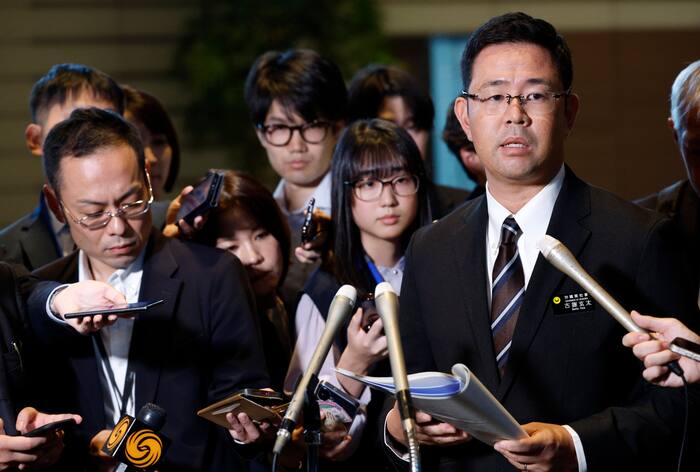
Newly elected Okinawa Governor Genta Koja didn't mince words during his trip to Tokyo. Fresh into office, his very first major test involves standing up to national leadership and American commanders. In a packed room at the Prime Minister's Office, Koja laid out harsh truths to Prime Minister Sanae Takaichi.
He didn't hold back, stating that past disciplinary measures and human rights education from the U.S. military have completely failed. He pointed out that every time a similar crime occurs, authorities promise preventive measures, yet the cycle repeats.
The Response From Washington and Tokyo
Faced with mounting public outrage, the military response was swift. Lt. Gen. Benjamin Watson, commander of the III Marine Expeditionary Force, announced a 48-hour operational pause for training across the island. Troops were restricted from leaving their bases, alcohol consumption was banned, and a strict midnight-to-5 a.m. curfew was slapped on all personnel for the next thirty days.
Prime Minister Takaichi expressed deep regret over the heinous crime, signaling that Tokyo expects Washington to follow through with long-term fixes. Both governments know the stakes. More than 50,000 U.S. troops are stationed across Japan under a bilateral security treaty, and the vast majority are crammed onto Okinawa.
While Governor Koja acknowledged that the rapid reaction showed both governments are taking the situation seriously, he made it clear that curfews and short-term stand-downs are band-aids on a gaping wound. He wants direct Japanese oversight to ensure military discipline actually sticks this time.
Balancing Strategic Defense and Local Safety
Life on the island is a constant balancing act. On one hand, many residents recognize the growing regional security threats, particularly concerning China's expanding military ambitions. They understand why the alliance matters on paper. On the other hand, everyday life under the shadow of heavy base operations means dealing with constant aircraft noise, pollution, and the perpetual fear of base-related crime.
When young service members step out of line, it shatters the fragile trust between the host community and the armed forces. Past curfews and restrictions have rarely solved the underlying cultural and behavioral issues within base compounds. Troops return to normal routines once the political heat dies down, leaving locals to pick up the pieces.
Governor Koja's aggressive stance signals a shift in how local leadership handles these crises. Instead of quiet diplomacy behind closed doors, Okinawan officials are demanding structural accountability on the national stage. If the alliance wants to maintain its foothold in the region, basic community safety can't remain an afterthought.