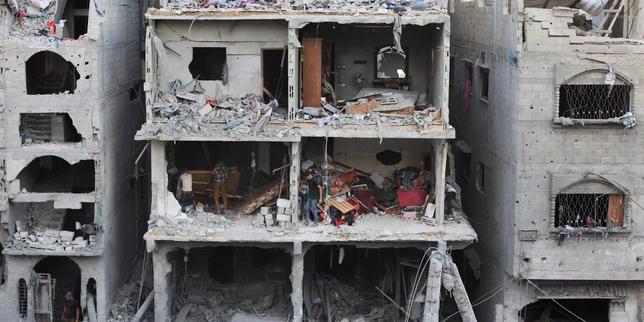
Twelve months have passed since a fragile cease-fire took hold across the Gaza Strip, yet the reality on the ground bears little resemblance to the promises made by Washington. Donald Trump’s twenty-point peace blueprint was supposed to bring an end to the destruction, disarm militant factions, and spark a massive wave of reconstruction. Instead, daily life in the enclave remains defined by ongoing bombardment, expanding military lines, and severe bureaucratic paralysis.
If you look past the diplomatic announcements, you find an enclave trapped in a dangerous status quo. The fundamental causes of the crisis remain unresolved, leaving two million people stuck between military occupation and unfulfilled promises. Let’s look at what went wrong, why the agreement stalled, and what experts say is actually happening on the ground.
The Illusion of a Cease-Fire Under Daily Bombardment
When the truce was agreed upon in October 2025, international mediators hailed it as a major breakthrough. It stopped full-scale ground invasions, but it never stopped the bloodshed entirely. The Gaza health ministry reports that more than 1,400 Palestinians have been killed by Israeli strikes since the cease-fire went into effect.
The strategy was never built on a complete military halt. The framework left room for operations targeting perceived security threats. Israel maintains that its strikes target active militants trying to regroup, while human rights monitors point to mounting civilian casualties among families sheltering in damaged buildings and tent camps. Five Israeli soldiers have also lost their lives in ongoing security incidents since the truce began. The absence of total war doesn't mean peace has arrived. It just means the conflict has morphed into a grinding, low-intensity war of attrition.
A Shrinking Strip and the Expanding Yellow Line
Trump’s original roadmap envisioned a phased withdrawal of Israeli forces back to a designated "yellow line," leaving roughly 53% of the territory under military control during an interim period. In practice, that boundary has shifted steadily westward.
Today, military authorities control around two-thirds of the Gaza Strip. The shifting frontline has displaced thousands more families, compressing a population of two million into an increasingly narrow coastal strip. Local officials and humanitarian workers watch helplessly as buffer zones expand, eating away at the space available for human habitation, makeshift shelter, and basic survival.
Why the Disarmament and Governance Plan Stalled
The second phase of the peace framework relied on two major pillars: the disarmament of Hamas and the introduction of a new technocratic administration backed by international monitors. Both have completely stalled.
In July, Washington announced a roadmap brokered in Cairo aimed at securing a phased surrender of weapons. Hamas indicated a willingness to store arms under the supervision of a Palestinian technocratic body, the National Committee for the Administration of Gaza, led by Ali Shaath. Yet, negotiations collapsed over sequencing. Hamas demands a full Israeli military withdrawal before any discussion of weapons surrender, while Israel refuses to pull back troops until total demilitarization is achieved.
Meanwhile, the International Stabilization Force meant to secure the enclave has struggled to assemble personnel on the ground, and the governing committee based in Cairo has been blocked from entering the territory. Without working local governance or international security forces, lawlessness and administrative vacuum fill the void.
Reconstruction Paralyzed by Funding and Politics
You cannot rebuild an enclave when tens of billions of dollars in damage remains unaddressed. A recent assessment by international organizations pegs total recovery needs at over seventy billion dollars across the next decade. Yet, actual financial commitments remain sparse.
A modest six-month recovery plan unveiled by the Trump-led Board of Peace aimed to raise over two billion dollars for immediate projects. While international donors have made vague pledges totaling billions, actual cash disbursements lag far behind, sitting at a tiny fraction of what is required. Trucks carrying essential goods enter the strip daily, but averages hover well below the minimum targets outlined in the original agreement. Aid organizations warn that over one million residents continue to face acute food insecurity, with families scavenging through concrete rubble just to find materials to prop up leaking tents.
Competing Visions for the Future
The deepest flaw in the entire architecture is a fundamental disagreement over what happens next. Trump’s blueprint formally states that Palestinians must remain in Gaza and lead its rebuilding efforts. Conversely, influential figures in Israeli right-wing politics continue to advocate for policies aimed at encouraging the voluntary emigration of the population.
This ideological friction paralyzes long-term planning. When political leaders openly debate whether the territory's inhabitants have a future there, foreign investors hesitate to commit funds, and residents live in permanent uncertainty.
The first anniversary of the agreement is not a celebration of peace. It is a stark reminder that diplomatic frameworks without enforcement mechanisms or political will cannot heal a broken landscape. Real reconstruction cannot begin until the fundamental questions of sovereignty, security, and freedom are honestly addressed.