Real estate in Los Angeles has its own strange gravitational pull, especially when Hollywood royalty is attached to the deed. But even in a market accustomed to astronomical price tags and celebrity homeowners, some properties refuse to move quickly. That was the reality for a storied Spanish Colonial compound in the prestigious Post Office neighbourhood of Beverly Hills, which finally traded hands for $14.7 million after sitting on the open market for a gruelling six years.
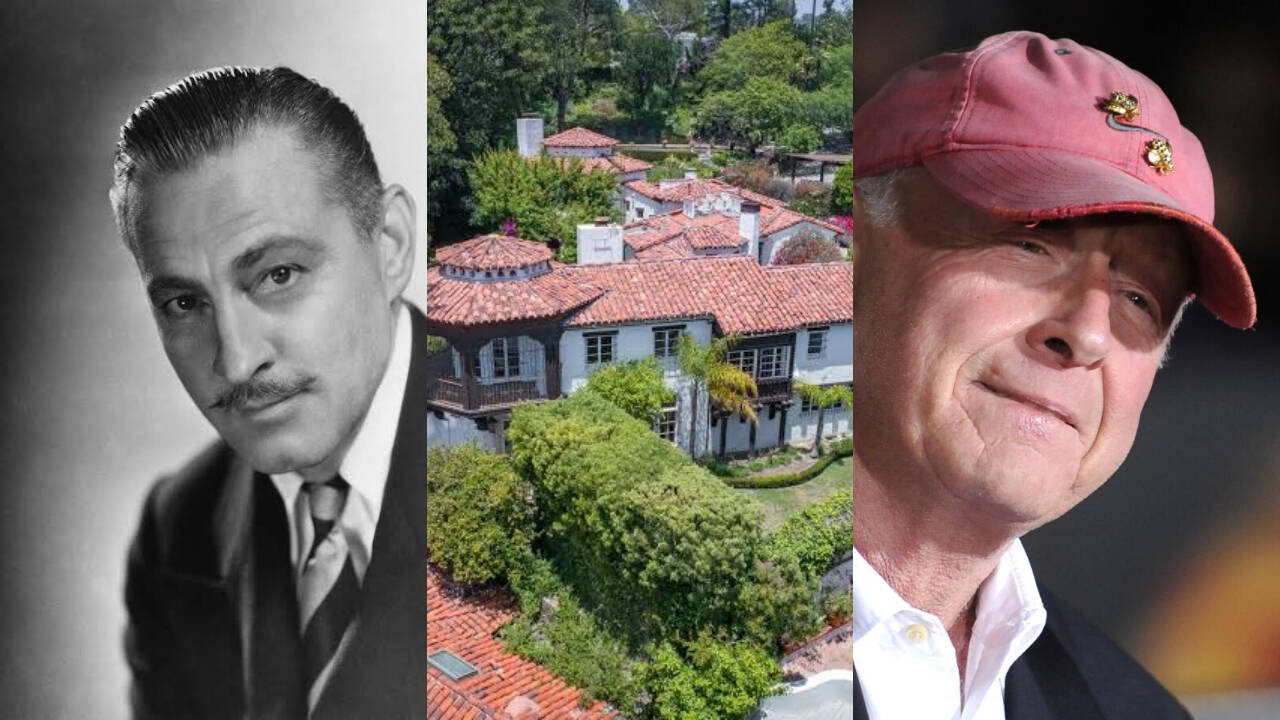
If you tracked the listing, you probably noticed the heavy pedigree right away. The sprawling compound comes soaked in cinematic history. It was built back in the late 1920s by architect John Byers and once belonged to silent film icon John Barrymore, grandfather to actress Drew Barrymore. Later, it passed to Donna Scott, widow of late director Tony Scott, who poured updates into the sprawling grounds. Yet, despite the star-studded chain of title and a sprawling 6,976 square feet of living space, luxury buyers hesitated for years.
The buyer who finally broke the stalemate? Director McG, who famously steered Drew Barrymore through high-octane action sequences in the Charlie's Angels films. Hollywood loves a full-circle narrative, and this transaction feels straight out of a script. But beneath the celebrity trivia lies a fascinating look at why massive historic estates often turn into real estate purgatory.
Inside the Century-Old Beverly Hills Compound
Occupying just under an acre of prime Los Angeles land, the property doesn't rely on a single monolithic mansion. Instead, John Byers designed it as a private, fragmented enclave. The layout includes a three-bedroom main house flanked by two separate guest cottages, a one-bedroom bungalow, and a two-storey guest house. More insights into this topic are explored by Associated Press.
Walking through the main residence reveals why preservationists fawn over these older California builds. You get exposed-beam ceilings, thick arched windows, original French doors, and hardware that survived decades of industry parties. The formal living room features a striking mural-painted ceiling, while a wood-panelled library centers around a heavy stone fireplace and built-in floor-to-ceiling bookshelves.
Then there is the pub room. Complete with a dedicated bar, a dartboard corner, and its own fireplace, it looks like a remnant of classic Hollywood excess where studio bosses hashed out contracts over whiskey.
The Modern Clash With Historic Charm
Buying a historic home in Los Angeles sounds romantic until you actually have to live in it or update its plumbing. Over the years, the estate underwent careful modernizations. Tony Scott and his estate invested heavily in making certain spaces functional for contemporary living. Some of the guest quarters received stark, understated concrete walls and minimalist finishes, creating a sharp visual contrast against the traditional Spanish Colonial framework.
That duality is often where historic luxury listings stall. Buyers shopping in the $15 million tier usually want absolute perfection, turnkey convenience, and ultra-modern amenities like zero-edge infinity pools and smart-home automation built directly into the blueprint. A multi-structure compound with split personalities—historic wood-beamed libraries on one side and raw concrete guest rooms on the other—requires a very specific buyer who appreciates architectural friction rather than uniform luxury.
Furthermore, sprawling compounds with multiple detached guest houses carry massive ongoing maintenance costs. Property taxes, insurance in fire-prone California hills, and general upkeep on a century-old wood-and-stucco structure can easily drain a bank account. When a home sits on the market for six years, carrying costs compound quietly in the background, eventually forcing sellers to accept a realistic market price rather than an aspirational valuation.
Grounds Built for Entertaining
Outside the main structures, the estate leans hard into the classic California lifestyle. Stone and brick pathways snake through shaded loggias, connecting the various cottages. The grounds feature a koi pond, classic water fountains, and a kidney-shaped swimming pool that looks straight out of a 1950s cinematic backdrop.
It is easy to picture Tony Scott hosting industry elites here, or imagining John Barrymore entertaining guests during Hollywood's golden age. The atmosphere is undeniably resort-like, offering complete seclusion behind gates despite sitting minutes away from the bustle of the city.
When McG stepped in to purchase the property for $14.7 million, he didn't just acquire a piece of real estate; he bought into an ongoing Hollywood lineage. The property has transitioned from silent film royalty to blockbuster directors, proving that while houses take time to sell, a great Hollywood story never truly goes out of style.