Diplomatic pleasantries are officially dead. When Russian Foreign Minister Sergey Lavrov brushed off a rare high-level meeting with his German counterpart during the United Nations General Assembly, he wasn't just rejecting a conversation—he was signaling that Moscow has zero interest in European mediation.
The fallout was immediate and brutal. Hours after Lavrov dismissed German Foreign Minister Johann Wadephul's appeal to ease tensions toward NATO, a fresh wave of aerial bombardments tore across Ukraine, killing at least two people and leaving infrastructure ablaze.
If you're wondering why diplomatic breakthroughs feel impossible right now, look at how both sides operate behind closed doors. Wadephul went into the New York meeting asking for a genuine commitment to end hostilities. Lavrov walked out complaining that the German official did nothing more than repeat standard Western condemnations.
Communication isn't happening. Both capitals are just talking past each other.
The Ground Reality Behind Closed Doors
Let's look at what actually triggers these escalations. Ties between Berlin and Moscow hit a severe low following a suspicious drone incident at Germany's Leipzig airport, which Berlin officials pinned directly on the Kremlin.
Since then, Germany has leaned harder into its support for Kyiv, prompting Moscow to harden its diplomatic stance. When German diplomats tried to open a channel at the U.N., the Kremlin treated it as a PR stunt rather than a serious peace overture.
Lavrov made no secret of his disdain after the talks wrapped up. He publicly challenged reporters to decide whether repeating established political positions counts as actual dialogue.
Night Skies and Burning Buildings
Diplomacy failed in a New York boardroom, and ordinary Ukrainians paid the price on the ground.
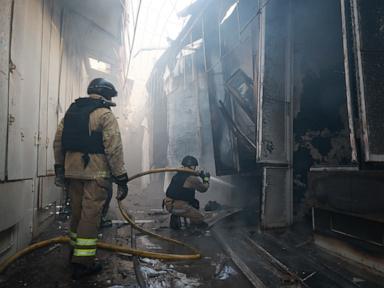
Overnight strikes targeted multiple regions with lethal precision. In Kyiv, a non-residential building took a direct hit from a Russian drone, killing a man instantly. Just blocks away, a local vehicle repair shop caught fire after a separate strike, forcing emergency crews to spend hours battling the flames.
Meanwhile, the southern Odesa region—vital for the country's Black Sea shipping lanes—faced a separate barrage. Local military administration head Oleh Kiper confirmed that strikes in Odesa killed one person and wounded two others.
Front lines across the country have barely budged for months, turning the conflict into a grinding war of attrition. Moscow relies heavily on cruise missiles, ballistic weapons, and heavy glide bombs to batter Ukrainian cities. In response, Kyiv continues pushing its long-range drone program deep into Russian territory, targeting oil refineries and industrial infrastructure to choke off the Kremlin's war chest.
Where the War Goes From Here
Don't expect European mediation to salvage this situation anytime soon.
Moscow's official line remains fixed. The Kremlin frames its entire campaign as a defensive "special military operation" meant to secure its borders. On the other side, Western capitals insist that any real conversation requires a complete halt to Russian aggression.
As long as those two positions occupy the same universe, diplomatic summits at the United Nations are just theater. The real decisions are being made by drone operators and artillery crews, and the cost keeps climbing for everyone caught in the crossfire.