We often talk about politics through the lens of big cities. When election season rolls around, the focus usually lands on urban centers like Casablanca, Rabat, or Marrakech, where campaign rallies draw massive crowds and digital debates flood social media. But if you look past the noise of the metropolitan areas, a completely different reality shapes the political map. The rural vote remains the silent engine of Morocco's legislative outcomes.
During the September 2026 legislative elections, nearly 16 million citizens were called upon to elect the 395 members of the House of Representatives, as reported by Le Matin. While urban turnout often suffers from deep voter apathy and disillusionment, rural constituencies consistently demonstrate robust participation rates. Understanding how these non-urban regions function tells you everything you need to know about where political power actually resides in the kingdom.
The Urban Disconnect Versus Rural Mobilization
Walk through downtown Casablanca on election day, and you might notice a striking lack of enthusiasm. Analysts and research groups, including findings highlighted by the Arab Reform Initiative, point out that urban middle-class voters and younger demographics frequently question the tangible impact of parliamentary politics. High youth unemployment and socioeconomic divides feed a general distrust toward traditional political parties.
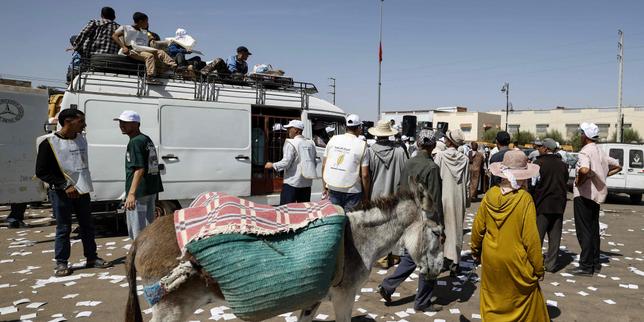
Yet, outside the major cities, the dynamic flips entirely. Rural inhabitants approach ballot boxes with a very different mindset. Local community ties, tribal structures, and deeply rooted social networks ensure that campaigns are intensely personal affairs rather than abstract ideological debates. Candidates who spend months walking through agricultural plains and remote mountain villages understand that winning requires face-to-face trust.
How Electoral Mechanics Amplify the Countryside
The mechanics of the electoral system heavily influence why outside-the-city votes carry such immense weight. Morocco's proportional representation framework is designed to prevent single-party dominance, scattering seats across numerous regional lists. In smaller districts where total voter pools are compact, every single ballot translates into a much higher relative value for seat distribution.
Urban districts feature massive populations, but their sheer size often dilutes voter impact and breeds anonymity. In contrast, rural circumscriptions operate on proximity. Local notables, agricultural cooperatives, and regional syndicates act as influential channels of mobilization. When a candidate secures the backing of local leaders, entire communities tend to follow suit. This disciplined mobilization creates predictable reservoirs of votes that urban political managers constantly envy.
Social Realities Behind the Ballots
It is a mistake to view the rural electorate as uniform or easily swayed by superficial promises. Communities outside the major urban hubs face very real structural challenges, including agricultural water scarcity, infrastructure gaps, and limited access to specialized services. For these voters, the legislative ballot is a direct tool to lobby for state investment, road construction, schools, and healthcare facilities.
When political parties deliver targeted programs addressing local economic survival, turnout surges. The national debates about grand diplomatic strategies or abstract institutional reforms matter far less here than concrete local development plans. Parties that fail to connect national policy with the daily realities of farming communities quickly find themselves locked out of parliamentary influence.
Looking Beyond the Metropolises
The 2026 elections proved once again that ignoring the countryside is a fatal strategy for any aspiring political coalition. While city dwellers dominate headlines and online discussions, the quiet discipline of the rural electorate continues to determine who gets to sit in Parliament and form the government. Real political change in the kingdom starts far away from the bright lights of the capital.