Property rights sound simple on paper. You buy land, you own it, and if the government ever wants to take it, they have to pay you what it is actually worth. But what happens when a $1.35 million investment turns into a three-decade legal marathon involving millions of dollars, competing expert appraisals, and shifting state positions?
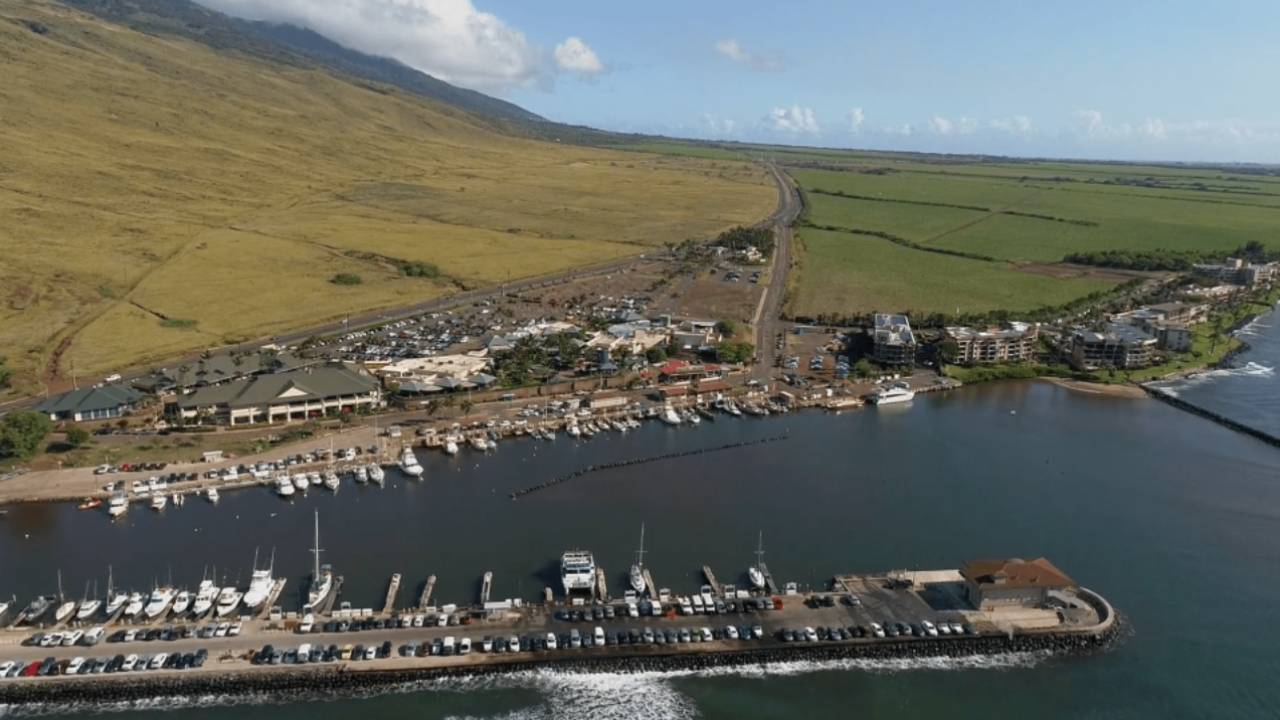
That is the reality of the long-running dispute over 1.137 acres beside Maui's Maalaea Small Boat Harbor. Don Howard Williams Jr. bought the waterfront plot in August 1994 for $1.35 million. He probably didn't expect that more than thirty years later, courts would still be arguing over its true valuation. A Hawaii appeals court just vacated a $7 million compensation judgment in favor of Williams, blowing the case wide open again. If you think eminent domain cases are straightforward, this timeline will change your mind.
How a 1994 Purchase Started a Decades Long Court Fight
To understand where things stand now, you have to look back at how the land changed hands. The property had a messy history long before Williams bought it from FSO Oklahoma Investments Corp., an entity tied to the Church of Scientology's Flag Service Organization. Back in the late 1970s, developers planned a condominium project on parcels that eventually became part of this site. Financial trouble hit, the project died, and ownership bounced around between Pioneer Federal and various private investors before landing with the Scientology-linked entity in 1992.
Williams saw potential. He bought the land in 1994, picturing a mini hotel development similar to the famous Ilikai in Honolulu. Just four weeks after buying it, he entered into a 30-year lease with the State of Hawaii.
That lease set off a steady financial stream. The state started paying roughly $150,000 a year in rent in 1994. By 2013, those annual payments had ballooned to about $350,000.
When the State Changed Its Mind on Eminent Domain
Everything hummed along until June 2013. Instead of continuing to write checks for rent, the State of Hawaii filed a complaint to condemn the property. The stated goal was to use the land for improvements connected to the adjacent Maalaea Small Boat Harbor.
When the state filed the action, it deposited roughly $4.17 million based on its initial estimation of just compensation. At that time, the state's appraisal factored in both the land value and the income generated by the active lease.
Then the state shifted its legal strategy. Officials argued that the ongoing lease income shouldn't be presented to a jury when calculating the property value. Williams pushed back hard. He pointed out that excluding a lease producing hundreds of thousands of dollars annually meant he wouldn't receive fair compensation for what he actually owned on the statutory valuation date of June 27, 2013.
In June 2018, the parties agreed on a temporary $4.165 million compensation figure to keep things moving, but Williams intentionally kept his right to appeal alive.
The Battle Over Valuation Methods
The legal ping-pong intensified over the next few years. In April 2024, the Intermediate Court of Appeals ruled that the lower court had made a mistake by blocking evidence related to the leased interest. The Hawaii Supreme Court declined to review it, sending the case back down.
Armed with that ruling, Williams filed for summary judgment in February 2025. He asked for $7 million, relying on an appraisal by expert R.W. Spangler who used the income-capitalization method. The state countered with its own expert, James Hallstrom, arguing that a comparable-sales approach made more sense.
The Circuit Court sided with Williams, granting his summary judgment motion and awarding him $7 million. But that victory didn't stick.
On September 30, 2026, the Intermediate Court of Appeals vacated that 2025 judgment. The appellate court pointed out a critical flaw: the lower court had improperly excluded the state's expert appraiser, James Hallstrom, even though an earlier 2018 stipulation barred Williams from throwing out that specific report. Because competing expert evidence still existed, the lower court had no business resolving the valuation dispute through summary judgment.
What the Appeals Court Decision Actually Means
The appellate court clarified an important legal distinction regarding property valuation. Williams argued that the income-capitalization method was the only valid choice because the land produced actual lease income. The state insisted on comparable sales.
The appeals court ruled that while income-capitalization evidence is admissible, it doesn't automatically make comparable-sales evidence illegal. If an appraiser looks at sales of similarly encumbered properties, a jury can weigh that evidence. Any differences between properties simply affect the weight of the evidence, not whether a jury gets to hear it.
This latest ruling doesn't hand a win to the state, nor does it lock in a payout for Williams. It simply resets the board. The $7 million judgment is gone. The case goes back to the Circuit Court to let a proper evaluation of competing appraisal methods happen through actual trial proceedings rather than a shortcut summary judgment.
Lessons From a Thirty Year Property Saga
Real estate investors and landowners can learn a few stark lessons from this Maui standoff.
- Government leases carry built-in exit risks: Leasing property to a government agency can provide reliable income for years, but an eminent domain action can terminate that agreement abruptly.
- Valuation methods matter immensely: The difference between an income-capitalization approach and a comparable-sales approach can swing a property valuation by millions of dollars.
- Procedural rules will trip you up: Stipulations signed years prior can completely hamstring your legal strategy later if you fail to account for preserved evidentiary rulings.
The Maalaea harbor land sits largely undeveloped, just as it did when Williams first walked past it in the 1970s. As the case returns to the lower court, the ultimate price tag for the state's acquisition remains completely undecided.