History isn't just written in books. Sometimes, it's locked inside ink-stained, handwritten pages sitting quietly in damp maritime archives.
More than 255,000 historical weather records have been pulled directly from 19th-century British Royal Navy ship logbooks. Thousands of everyday volunteers pitched in to transcribe these scanned pages through the Weather Rescue at Sea initiative on the Zooniverse platform. The resulting dataset stretches across the 1860s, specifically from April 1861 to March 1865, capturing conditions across almost every major ocean basin.
Scientists desperately need these ancient observations. Modern climate models rely heavily on long-term data series, yet marine weather records from the mid-19th century remain sparse, particularly away from well-trodden trade routes. By digging into old ship logs, researchers can finally patch historic gaps in our understanding of pre-industrial and early-industrial climate behavior.
Why 19th-Century Ship Logs Matter More Than You Think
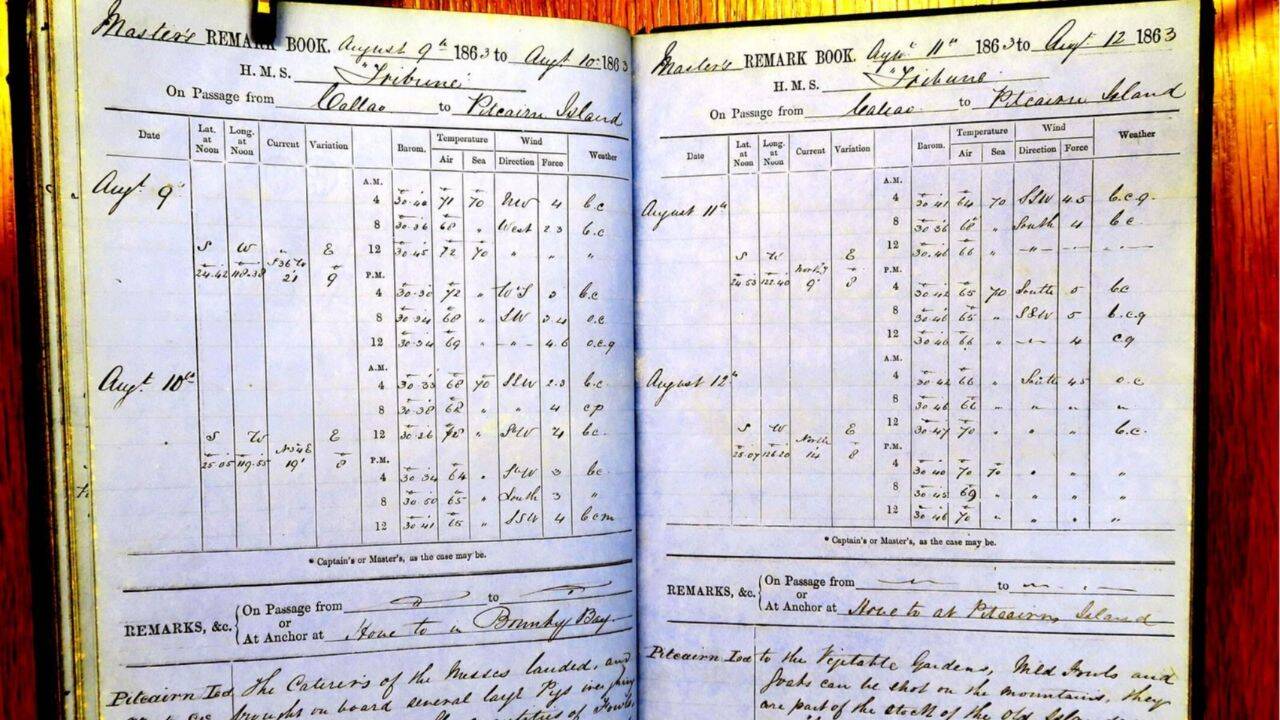
Royal Navy logbooks weren't casual diaries kept by bored sailors. They served as vital working documents for navigation and ship operations. Officers recorded weather data religiously, often logging observations at four-hour intervals.
A standard logbook page typically packed four days of entries into neat columns. While the ship's position was stamped at noon, meteorological readings—including air pressure, air temperature, sea surface temperature, wind direction, and wind speed—happened up to six times a day.
The real magic of these specific naval logs lies in where the ships sailed. Standard historical weather datasets often suffer from massive geographic blind spots. This newly rescued collection fills those blank spaces with observations from the North and South Atlantic, the Indian Ocean, and patches of the Pacific. It even covers waters around Hawaii, the west coast of South America, parts of the Southern Ocean, the Sea of Japan, and the South China Sea.
The Crowdsourcing Engine Behind the Rescue
Reading cursive handwriting produced over 150 years ago isn't easy. It takes human patience rather than automated computer vision.
Launched in October 2021, the Weather Rescue at Sea project invited anyone with an internet connection to help transcribe scanned Royal Navy logbooks. Organizers built separate workflows for tracking navigation, pressure, temperature, and wind. They provided tutorials, field guides, and community forums so that people without any scientific background could jump right in.
Around 4,500 volunteers tackled roughly 190 logbooks over an intense 18-month stretch. To keep the data clean, the project relied on redundancy. Every single image was transcribed by at least four different volunteers, while wind observations required six. Comparing multiple entries side-by-side allowed researchers to spot and filter out transcription errors quickly.
Handling historical text brought plenty of unexpected hurdles. Ships frequently logged their locations using old port names or local landmarks instead of precise latitude and longitude. Volunteers helped construct geolocation tables to map these historical names back to exact coordinates. Any minor gaps between recorded positions were resolved using basic interpolation when the ship's movement made physical sense.
What the Data Actually Changes
The numbers speak for themselves. When researchers compared their newly rescued figures against existing collections like the International Comprehensive Ocean–Atmosphere Data Set for the same decade, the differences were striking.
The rescued collection yielded roughly 11,000 monthly marine air-temperature observations for the 1860s, beating out the roughly 9,000 found in standard legacy datasets. For air pressure, the improvement was even more dramatic, nearly doubling the available comparable records for that timeframe.
These numbers don't just sit in a spreadsheet. They feed directly into reanalysis systems that recreate past atmospheric conditions, helping researchers map historical weather extremes with sharper accuracy.
The best part? This project barely scratches the surface. Millions of ship logbooks remain untranscribed across global archives, waiting for people to open the covers and read what the oceans looked like centuries ago. If you want to contribute to active citizen science initiatives, check out active projects on platforms like Zooniverse and start transcribing history yourself.