Glaciers aren't just frozen blocks of water. They're ancient filing cabinets. Right now, Norway's high mountain ice is shrinking at an alarming rate, and it's spitting out thousands of years of human history faster than researchers can pack it into crates.
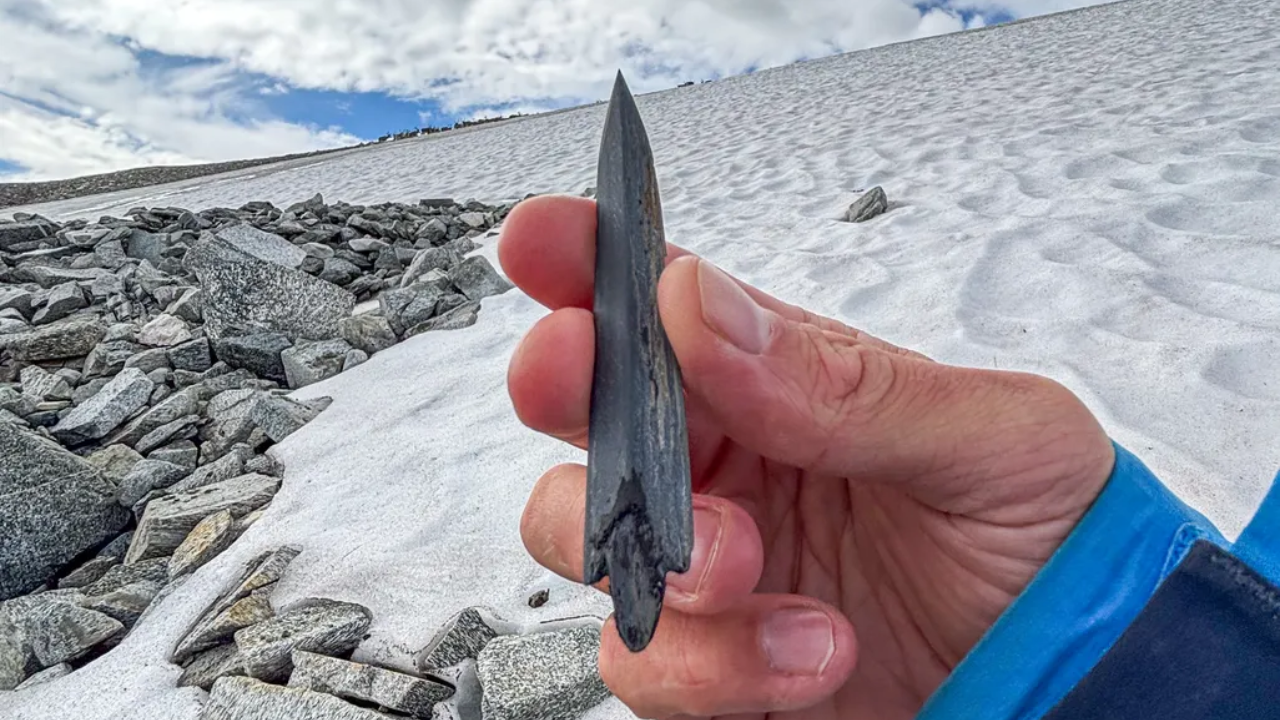
In the Jotunheimen mountains, a recent three-week expedition by the Secrets of the Ice project yielded 48 prehistoric arrows in one go. Some of these artifacts date back between 5,000 and 6,000 years. It's a goldmine for archaeologists, but it's happening under a terrifying deadline. Once ice melts and exposes organic materials to air and sunlight, decay moves fast. Wood, leather, and sinew don't last long once they're out of the deep freeze.
The Changing Face of Glacial Archaeology
When researchers started looking into Norway's melting ice patches back in 2006, they expected to find Viking-era gear. Most of the early finds sat comfortably within the last two thousand years.
That script has flipped entirely.
As older, deeper layers of ice vanish, the Stone Age and Bronze Age are bleeding out into the open air. The recent finds at Kvitingskjølen—spanning ice patches like Langfonne, Storefonne, and Hanklefonne—prove that these high-altitude spots were hunting highways millennia ago.
You aren't just looking at random dropped items. You're looking at a multi-millennia hunting tradition.
Consider the variety packed into those 48 arrows:
- One standout piece features a rare slate arrowhead attached to fragments of its original wooden shaft, clocking in at roughly 5,000 to 6,000 years old.
- Another complete arrow from around 3,600 years ago utilizes an arrowhead crafted from a freshwater mussel shell.
- Other specimens swap stone for bone or iron, tracking the technological evolution of ancient hunters tracking reindeer across the snowfields.
Why Organic Artifacts Survive (And Why They Die Fast)
Dirt archaeology is brutal on organic materials. Acidic soil eats wood, cloth, and leather in decades.
Ice works differently. When items get trapped in stable, freezing alpine conditions, biological decay crawls to a near-stop. That's why Norway's mountain patches have previously coughed up entire tunics from 300 AD, mittens from 1000 AD, and even the oldest intact pair of wooden skis ever recovered.
The tragic paradox is simple. The exact climate shift that reveals these treasures is the exact force that destroys them.
When an arrow stays locked inside a glacier, it survives for millennia. The moment the ice retreats and the artifact sees sunlight, the clock starts ticking. Without immediate intervention, wind, moisture, and microbial activity tear through the organic fibers. Archaeologists don't have the luxury of slow, methodical multi-season digs. They're sprinting against atmospheric destruction.
The Twenty-Year Countdown
Espen Finstad and his team from Innlandet County Council and the Museum of Cultural History in Oslo know they're running out of runway. Observations over the past two decades show that the landscape has shifted drastically. Places that used to be locked under permanent ice sheets are now barren rock and mud.
Current projections suggest that many of Innlandet’s ice archaeological sites could lose their remaining ice patches entirely within the next twenty years. Once that ice is gone, the archive is closed forever. Whatever hasn't been scooped up by researchers will rot into nothingness.
To combat this, the team acts like emergency responders. They document finds on-site with high-precision GPS, photograph them before sunlight degrades the colors, and pack them out. Some of the freshest recoveries head straight into refrigerated displays at the Norwegian Mountain Centre in Lom, giving the public a chance to peer at artifacts that saw daylight for the first time in six millennia just days prior.
What This Tells Us About Ancient Survival
Prehistoric hunters didn't just stumble into the high mountains when they got bored. They understood seasonal animal migrations. Reindeer head up into the chilly mountain heights during summer to escape biting insects and catch the breeze.
Ancient humans followed them up there, setting up tactical hunting camps and loosing arrows across the snow. The density of these finds shows a calculated, repeating strategy that lasted generations.
Every arrow pulled from the melting slush adds another data point to how early Europeans outsmarted harsh environments. They weren't just surviving; they were engineering gear specifically tailored to extreme altitudes.
The mountains are giving up their secrets, but they're doing it on a timer. Every degree the planet warms means another chunk of history vanishes into water and air. If you want to see how ancient ancestors lived, you have to look now, because the ice won't hold out much longer.